
Before demolition in Los Angeles, define the removal scope and confirm the permits, surveys, utility controls and site protections needed for that specific property. A demolition permit, an asbestos assessment and utility arrangements are separate preparation tasks. Set the equipment date after the responsible parties have confirmed readiness.
This guide helps property owners prepare questions for BSLA, the permit authority and qualified specialists. It focuses on planning and estimate requirements; the qualified demolition team must establish the actual work method.
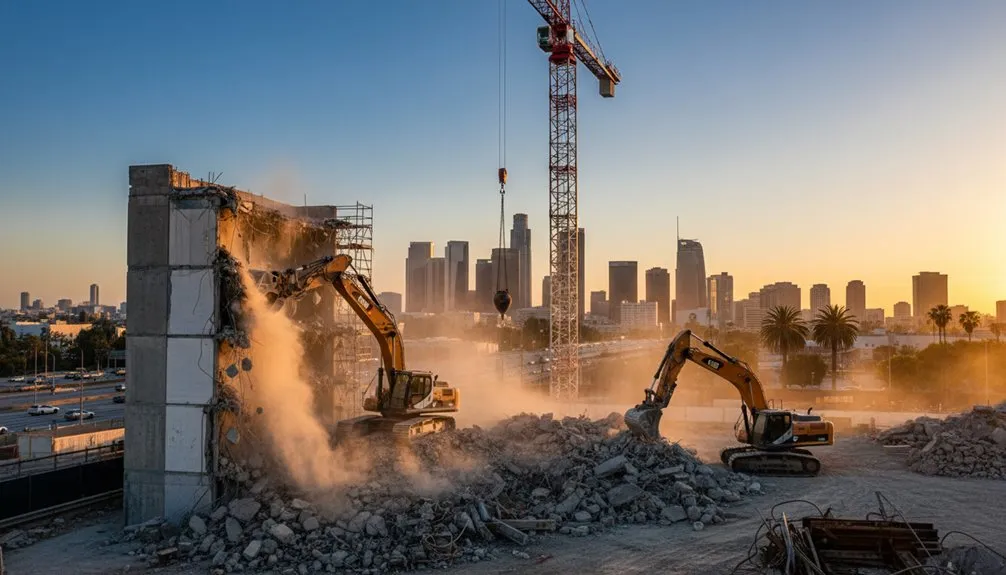
Identify full building removal, selective demolition, slab or footing removal and associated site clearing separately. Mark retained structures, shared walls, underground services and any occupied areas. Structural and nonstructural work can have different review and safety implications.
Provide the address, current use, approximate building area, age information and available drawings. Tell the team about known damage, previous alterations, tanks or industrial uses. For commercial, multifamily or occupied properties, have the authority and designer identify additional approvals and protection needs; do not assume the process matches a detached garage.
LADBS Demolition of Buildings, P/BC 2026-039 sets out building demolition permits, plans, pre-inspection and possible clearances. The process includes property-specific considerations such as building age, historic review and notice requirements. Ask the Department to identify the current requirements for the actual building before committing to a start date.
Keep the approved plans, permit conditions and inspection responsibilities together. Confirm who obtains each approval and who provides information for outstanding clearances. The City process does not replace another jurisdiction’s procedures or separate environmental requirements.
If demolition will be followed by new foundations or grading, include those next-stage approvals in the overall schedule. Our demolition and excavation planning guide explains the handoff between removal and earthwork.
Cal/OSHA Section 1734: demolition survey and supervision requires a qualified person’s written structural survey before employees start demolition. It must address structural condition, potential unplanned collapse and affected adjacent structures. Keep it on site for the project, with qualified supervision responsible for the work.
Under South Coast AQMD Rule 1403 FAQs, obtain the required asbestos survey through a Certified Asbestos Consultant or a Certified Site Surveillance Technician with the consultant’s signed report. Building age alone does not establish that asbestos is absent. Ask the consultant to identify the applicable assessment and removal requirements before materials are disturbed.
Demolition as defined by South Coast AQMD Rule 1403 requires notification even when no asbestos is found. The normal notification deadline is at least 10 working days before work; special procedures must be confirmed with AQMD. Non-load-bearing removal and renovation categories can differ. Name the party responsible for the notification and verify the applicable start date.
Asbestos, lead and silica are different hazards. The employer must evaluate and control relevant exposures under the applicable rules, including Cal/OSHA Section 1532.1: lead in construction and Cal/OSHA Section 1532.3: construction silica exposure. General dust suppression or a disposable mask does not establish compliance. Have appropriately qualified specialists perform regulated work and specify their scope separately.
Cal/OSHA Section 1735: demolition precautions and utilities requires notification to utilities and services to be shut off, capped or otherwise controlled before demolition. If electricity or water is needed during the work, the services must be rearranged as necessary and protected from damage.
Assign the utility coordination and qualified trade work, document what remains active, and communicate the controlled work limits to the crew. Do not treat an 811 ticket as proof that building services have been disconnected. If excavation follows demolition, arrange the separate locating process and investigate private facilities using our 811 preparation checklist.
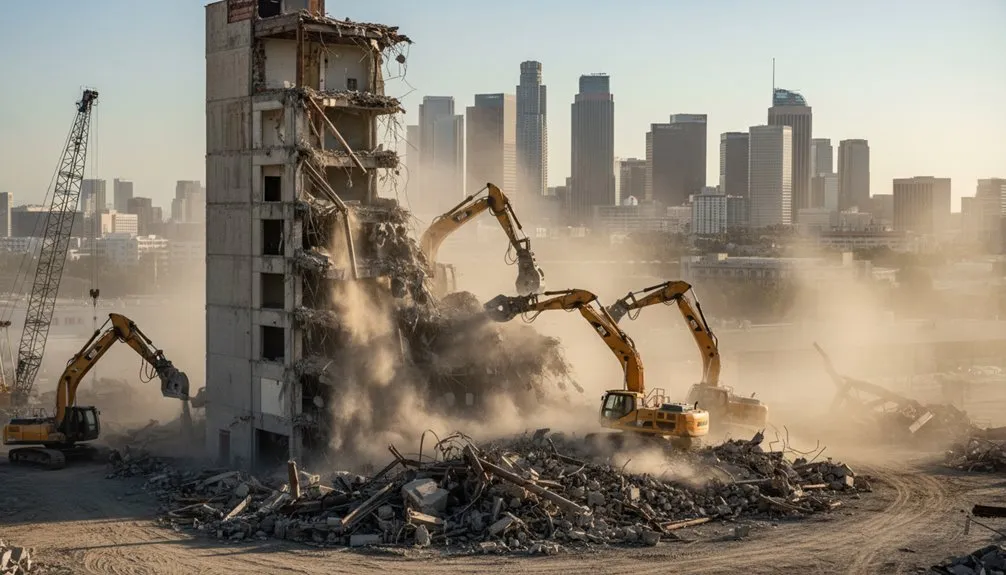
The qualified team must evaluate structural stability, adjacent property, fall and falling-material hazards, equipment loading and access before choosing the method. Section 1735 requires correction of survey-identified hazards and continuing inspections as demolition progresses.
Agree on barriers, exclusion areas, pedestrian protection, truck movements and access for any occupants. Clarify which retaining walls, structures and utility installations must remain protected. Keep owners, children, pets and unauthorized visitors outside the work zone.
Changes in structural condition, suspect materials or unexpected services require reassessment by the responsible professionals. Avoid a schedule that assumes all demolition is a simple machine operation regardless of the building or site.
Identify concrete, metal, wood, mixed debris and any separately regulated waste streams before comparing proposals. Ask the hauler which receiving facilities will accept them and what records the owner will receive.
Confirm the applicable local recycling and waste-handling requirements with the permit authority and waste provider. Retain load records, receipts and weight tickets needed for closeout. Do not assume a stated recycling percentage has been achieved without project records.
Define the final condition after removal: whether slabs and foundations are included, how openings are protected, whether backfill is authorized, and which inspection or next-trade handoff ends the demolition scope.
Ask for a written removal scope, permit and survey responsibilities, utility controls, site protection, loading, hauling, disposal and restoration. Identify specialist work, testing, temporary services and inspection-related delays as inclusions or exclusions.
Verify the contractor’s qualifications for the actual work and request relevant project references and current insurance information. Use those records and a clear proposal to assess the team, rather than unsupported awards, review claims or completed-project totals. Our excavation service overview provides context for discussing excavation and site-work needs with BSLA.
To discuss demolition and related site work with BSLA, call 323-403-0924 or request an estimate. Provide the ZIP code, the building type and approximate area, removal limits, occupancy, known material surveys, utility status, permit progress and access information and the intended schedule. Ask the team how to share plans and site photos after contact.
Request a written proposal showing the work limits, access assumptions, permit and specialist responsibilities, excavation or removal quantities, hauling, disposal, inspection hold points and final site condition. Identify exclusions and the process for approving unexpected work before equipment arrives.
When planning a demolition project, read our demolition safety overview and construction debris management guide to prepare questions about the work sequence, site controls and material handling.
Browse more articles in Demolition, Clearing & Hauling.
Accuracy review completed October 21, 2026. Confirm current requirements with the responsible authority and qualified project team.