
Before digging in Los Angeles, define the work area, arrange the correct DigAlert ticket and resolve utility responses before excavation begins. The minimum notice is two working days, excluding the day of notification. Paint and flags show approximate horizontal locations; they do not provide depth or identify every private line on a property.
Use this guide to prepare for a contractor visit, fence project, backyard trench or other planned excavation. A small hole can still encounter a shallow service line.
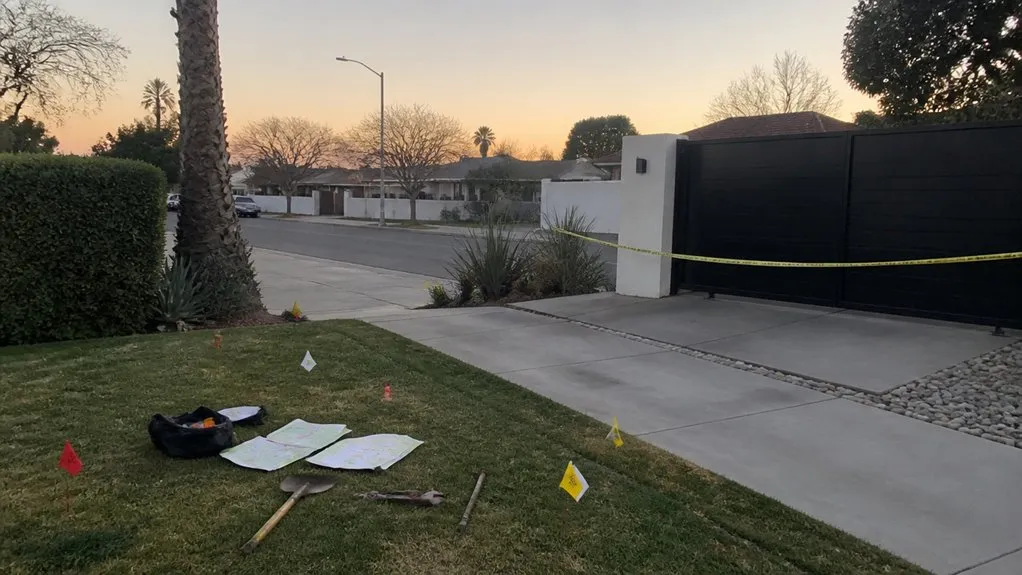
The legal notice period is not simply 48 elapsed hours. Under California excavation law, including notice, tolerance zones and damage reporting, planned excavation requires notice at least two working days, but no more than 14 calendar days, before starting. Use the start date and time on the ticket rather than calculating a start from memory.
For example, a request made on Monday ordinarily needs Tuesday and Wednesday as the two working days when neither is a holiday. That example does not replace the ticket’s legal start time or the requirement to resolve operator responses. Arrange the ticket with the contractor who will actually excavate; DigAlert excavator FAQs explains that a subcontractor doing the digging needs its own ticket.
Delineate the proposed excavation in white before notifying DigAlert, following its marking instructions. Include the actual trench, holes or grading footprint. A street address alone may not explain which side yard, driveway or rear lot is involved.
Give accurate access instructions for gates, pets and restricted areas. If you cannot clearly describe or delineate the work, resolve that with the excavator and DigAlert before scheduling equipment. The white outline describes proposed work; utility operators place their own facility markings.
DigAlert notifies participating facility operators. Their responses concern the facilities they own or maintain. According to the DigAlert homeowner FAQs, private facilities may need separate locating, and locators do not provide depth.
Review routes serving detached garages, ADUs, pools, irrigation, lighting and other backyard equipment. Ownership boundaries differ by service; do not assume a meter, cleanout or property line is the boundary for every utility. Nonpressurized sewer and drain lines are excluded from the statutory definition of subsurface installation, so an 811 response should not be treated as a complete sewer survey.
Ask a qualified private locator and the relevant trade how they will investigate owner-maintained lines. Provide existing plans, but treat old drawings as leads to verify. Mark colors identify service types; they do not establish an exact depth, ownership boundary or safe digging method.
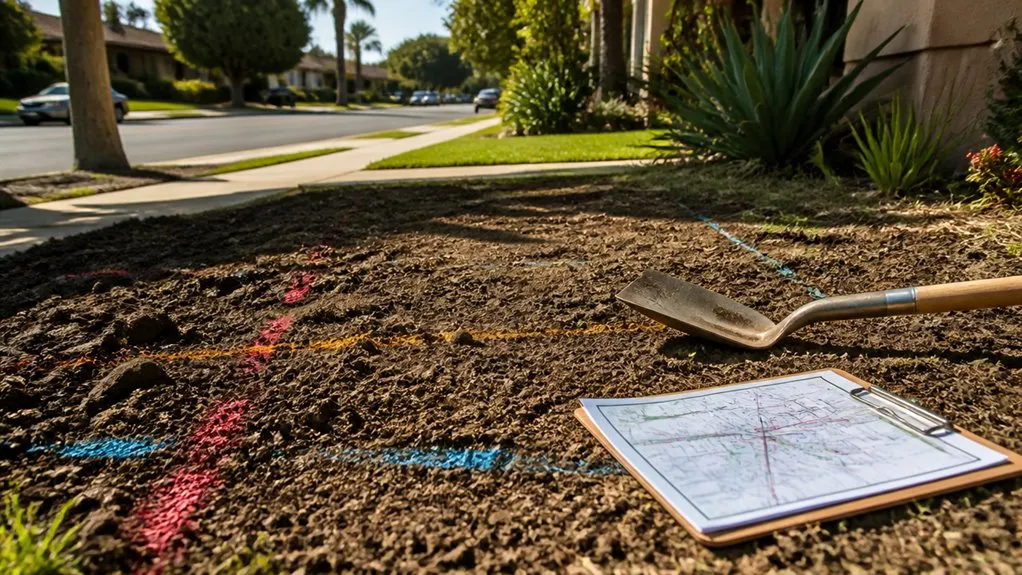
Keep the ticket and operator response list available. The excavator must receive the required positive responses and resolve inconsistencies between responses, markings and visible site features before starting affected work. A clear response from one operator is not clearance from every operator or a guarantee about private lines.
If a meter, riser or utility box suggests a facility that is not accounted for, stop the affected excavation and seek clarification. Photographs can help record the pre-work layout, but they do not substitute for visible marks or exact-location work.
California defines the tolerance zone according to how the operator marked the facility:
Section 4216.4 generally requires the excavator to determine the exact location of conflicting installations using hand tools before powered excavation or boring in the tolerance zone. Vacuum exposure is permitted under specified notice and operator-agreement conditions; it is not an automatic substitute. The California excavation law, including notice, tolerance zones and damage reporting sets out these requirements and exceptions.
Have the excavator interpret the markings and coordinate the exposure method with the facility owner. If the line cannot be found as expected, obtain operator assistance rather than enlarging the cut with machinery. Treat apparently inactive facilities with the same care as active ones.
A standard California excavation ticket is valid for 28 calendar days from issuance. That does not make missing, disturbed or unreadable marks acceptable for 28 days. Preserve the marks and follow DigAlert’s renewal and re-mark process before continuing affected work.
Review a changed route, expanded work area or delayed phase with DigAlert and the excavator. Do not assume an old ticket covers new limits. Record the expiration date and assign someone to manage updates so the equipment schedule does not depend on an expired request.
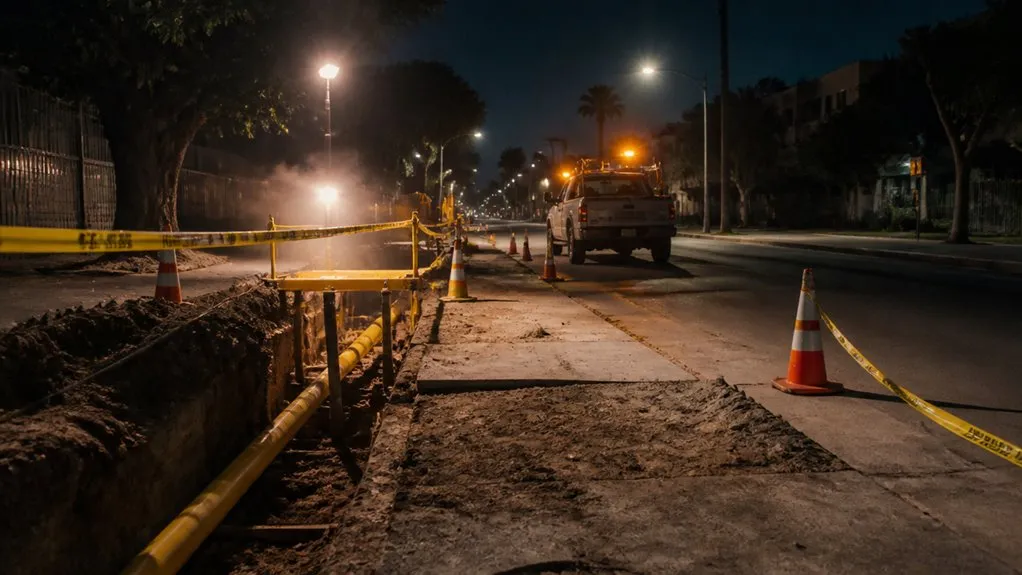
For a suspected gas leak, evacuate immediately and keep others away. From a safe location, contact SoCalGas at 1-800-427-2200. Follow SoCalGas natural gas leak instructions: avoid flames, electrical switches, phones and motorized equipment in the hazard area, and do not attempt to control or repair a leaking pipe.
If excavation damage releases gas or hazardous liquid, the excavator must immediately call 911 and then notify the operator under Section 4216.4. Other high-priority facility damage also triggers emergency reporting under that law. Report any facility damage to its operator, including a nicked coating; do not conceal it with backfill. This is an emergency response, separate from requesting a construction estimate.
Where do I request a Los Angeles ticket? Use DigAlert, the Southern California regional notification center, through 811 or its official online services. USA North 811 serves a different region.
What about small homeowner projects? Contact DigAlert before digging and explain the work. Do not assume shallow holes are clear of utilities. The statute contains specific property-owner exceptions; a homeowner’s exception does not remove a hired excavator’s obligations.
Who pays if a private line is damaged? Responsibility depends on the facts, contract and applicable law. Agree beforehand on locating, protection, emergency contacts and repair coordination rather than assuming every private-line repair falls to one party.
For planned trenching or excavation in Los Angeles, call 323-403-0924 or request an estimate from BSLA. Provide the ZIP code, project type, approximate route length, access width, surface materials, permit status and intended schedule. Ask the team how to share plans and site photos after contact.
Request a written scope identifying excavation, hauling, backfill and surface restoration separately from design, utility work and licensed trade installation or testing. Our excavation service overview explains the site-work services to discuss with the team.
If the project includes new service routes, continue with our underground utility trenching overview and gas-line trenching preparation guide to prepare the next set of questions for the contractor and utility provider.
Browse more articles in Planning, Costs & Permits.
Accuracy review completed October 21, 2026. Confirm current project requirements with the responsible authority, utility and qualified trade before work.
Skip to content