
A backyard water-line trench should follow a route and installation detail agreed with the plumber, the permitting authority and, when utility service work is involved, the water provider. Confirm who owns the pipe and where each contractor’s work stops before choosing the trench depth or scheduling equipment.
A replacement private line to an ADU or backyard fixture is different from a new utility service or meter upgrade. Both need coordinated access, locating and inspection planning, but they do not share one universal depth or clearance rule.
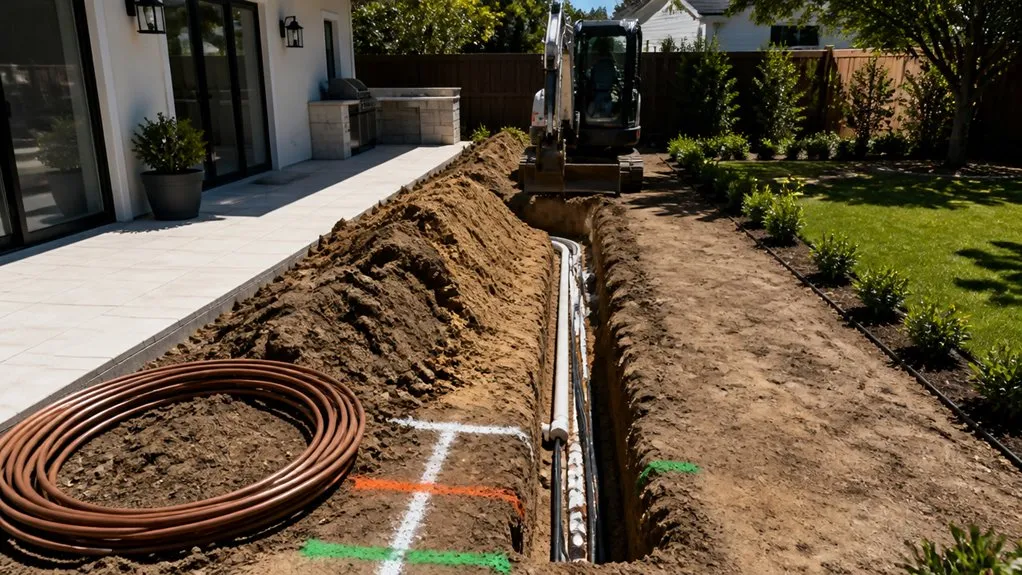
Have the plumber identify the start and end connections, pipe specification, required demand and applicable permit. Check whether the work changes the existing meter or service, crosses a public area, or remains on private property.
LADWP residential water installation and upgrades distinguishes utility service installation from the customer-side connection made by the customer or plumber. For a utility upgrade, coordinate with the water service representative before excavation. Confirm the ownership and responsibility boundary for the actual address; other Los Angeles County water providers may have different procedures.
Put design, trench excavation, pipe installation, testing, connection and restoration into separate scope items. Earthwork qualifications do not establish authorization to perform every plumbing or utility task.
Ask the plumber or designer to document required cover, how it is measured, and separation from sewer, gas and electrical facilities. Requirements depend on the installation, jurisdiction, utility ownership, surface use and approved details. Street-main standards should not be copied onto a private backyard pipe.
Set the route against the planned finished grade. Identify driveway loads, retaining walls, building footings and changes in elevation before digging. If the approved route cannot provide the required cover or separation, resolve the design with the responsible professional and authority before changing it in the field.
Before the locate request, delineate the proposed excavation in white. In Los Angeles, use DigAlert through 811. Give at least two working days’ notice, excluding the notification date; weekends and applicable holidays do not count. The excavator must check the ticket’s legal start time, all required positive responses and the field conditions before digging. Missing or inconsistent marks require resolution with DigAlert and the affected operator.
California excavation law, including notice, tolerance zones and damage reporting explains notice and exact-location requirements. Use the 811 homeowner checklist to organize ticket information and private-locating questions.
DigAlert responses do not identify every owner-maintained pipe. Account for irrigation, pool plumbing, existing private water lines and sewer laterals. Have conflicting facilities positively located by the appropriate method before powered excavation near them; paint does not establish depth.
List each crossing on the plan and have the plumber or designer confirm the applicable clearance and any required protective detail. A crossing may require a route change or an approved special detail. Encasing or grouting every crossing is not a universal solution.
Flag trees and likely root zones early. If the proposed trench conflicts with significant roots, get advice from a qualified arborist and the relevant authority before cutting or changing the route. Also identify work near footings, walls and buried structures so the excavation does not remove needed support.
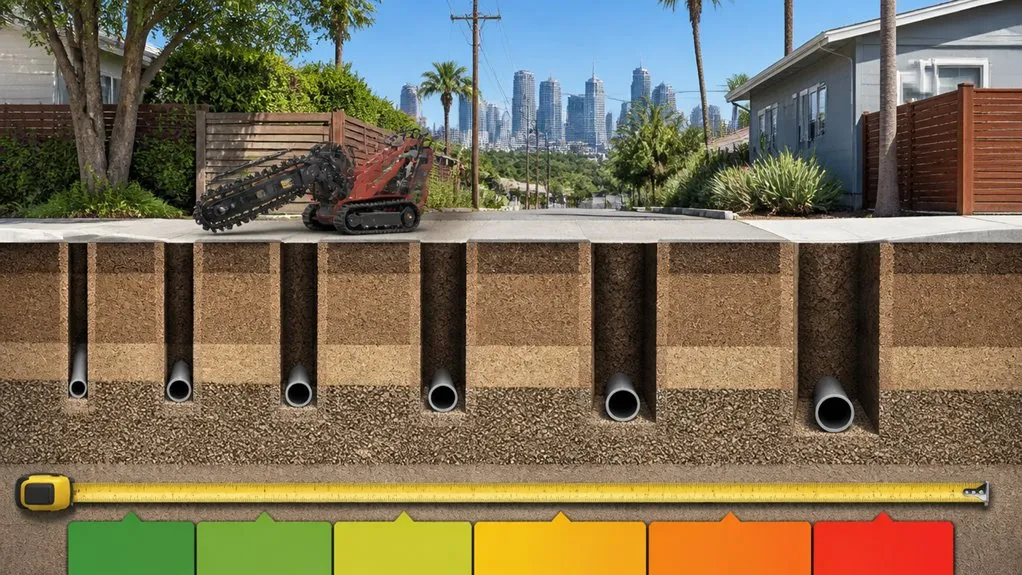
Length is only one pricing input. Access width, excavation depth, soil or rock, utility conflicts, protection systems, spoil handling, pavement removal and restoration can change the work substantially.
For a useful comparison, ask each contractor to identify the same route, depth assumptions, disposal quantity, imported backfill, inspection delays and surface finish. Keep the plumber’s pipe, testing and connection work separate unless the written proposal expressly includes it. A fixed per-foot allowance without these conditions is not a reliable project estimate.
Agree on the order before starting: verify locates and access; excavate to the approved detail; let the responsible trade prepare bedding and install pipe; complete required testing and inspection; obtain release before concealment; then backfill and restore the surface.
The permit and water provider determine inspection hold points. Ask who books each inspection and what must remain exposed. Do not assume an inspection after backfill can verify a concealed connection or crossing. Record approved changes and the final route for the owner’s files.
The contractor must evaluate the soil, water, nearby foundations, traffic and equipment loads before choosing the excavation method. Under Cal/OSHA protective-system requirements, Section 1541.1, employees need adequate cave-in protection unless the excavation is entirely in stable rock, or is less than 5 feet deep and a competent person finds no indication of a potential cave-in. Protection may therefore be needed below 5 feet.
Cal/OSHA excavation requirements, Section 1541 requires safe egress for trenches 4 feet or deeper, with no more than 25 feet of lateral travel for employees. Atmospheric testing applies before entry into excavations deeper than 4 feet where an oxygen deficiency or hazardous atmosphere exists or can reasonably be expected. A competent person must inspect excavations before work, as needed during the shift and after rain or other events that increase hazards when employee exposure can reasonably be anticipated. Homeowners should stay outside the excavation.
For new or changed LADWP water service, obtain the current project sequence and anticipated timing from the water service representative. Utility design, approvals, service availability and crew scheduling can affect the start. Avoid leaving an excavation open while waiting for an unconfirmed utility appointment.
Confirm which party excavates and backfills each portion, who connects at the meter, and how temporary access and water interruption will be managed. A backyard private-line job may follow a different sequence from a utility service installation.
Is there one minimum backyard water-line depth? Use the applicable plumbing requirements and approved project details for the actual pipe and location. A generic street-cover table does not settle that question.
Who handles trench safety? The employer must arrange competent-person assessment and the required protective measures. Wet ground, loose fill, adjacent loads or undermined structures can require changes before anyone enters.
When can landscaping be restored? After the required inspections and tests release the installation for cover, and the specified backfill and compaction are complete. Identify any further surface or final inspection separately.
For backyard water-line excavation, call 323-403-0924 or request an estimate from BSLA. Provide the ZIP code, project type, approximate route length, access width, surface materials, permit status and intended schedule. Ask the team how to share plans and site photos after contact.
Request a written scope identifying excavation, hauling, backfill and surface restoration separately from design, utility work and licensed trade installation or testing. Our excavation service overview explains the site-work services to discuss with the team.
For limited-access site work, also review our Bobcat and site-preparation overview when describing gates, side yards and spoil removal.
When preparing a backyard water-line project, use our 811 preparation checklist and underground utility trenching overview to organize the locating, access and excavation questions for the team.
Browse more articles in Trenching & Utilities.
Accuracy review completed October 21, 2026. Confirm current project requirements with the responsible authority, utility and qualified trade before work.
Skip to content