
For planned gas-line trenching in Los Angeles, settle the utility and private-piping responsibilities, approved route, locating and inspection sequence before excavation begins. The trench must fit the actual SoCalGas or qualified gas installer’s requirements; a generic depth or separation table is not enough.
Suspected gas leak? Evacuate immediately. From a safe location, call SoCalGas at 1-800-427-2200. If excavation damage releases gas, the excavator must immediately call 911, then notify the utility. Follow SoCalGas natural gas leak instructions and California excavation law, including notice, tolerance zones and damage reporting: avoid ignition sources and do not operate switches, phones or motorized equipment in the hazard area. Do not attempt to control or repair the pipe. A construction estimate is a separate process.
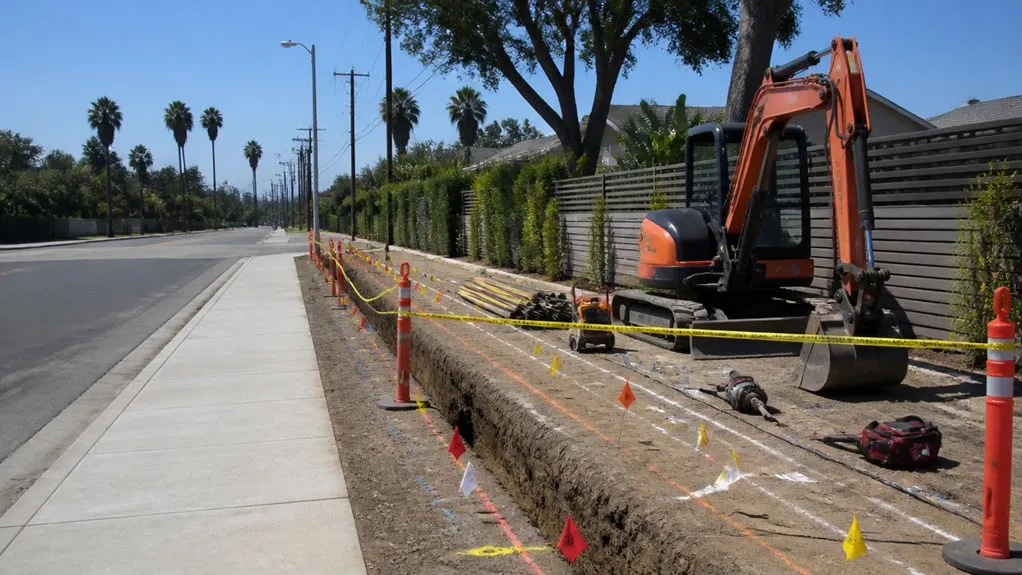
Distinguish a new or modified utility service from customer-owned gas piping to an ADU, pool heater or other appliance. Ask SoCalGas and the qualified installer where their respective work begins and ends, and who is responsible for the excavation.
Before the locate request, delineate the proposed excavation in white. In Los Angeles, use DigAlert through 811. Give at least two working days’ notice, excluding the notification date; weekends and applicable holidays do not count. The excavator must check the ticket’s legal start time, all required positive responses and the field conditions before digging. Missing or inconsistent marks require resolution with DigAlert and the affected operator.
Check the current ticket and private-line locating plan before equipment arrives. The homeowner’s request should not be assumed to cover a subcontractor performing excavation; coordinate the ticket responsibility with the actual excavator.
Review all operator responses against visible meters, risers and the planned work. Marks show approximate horizontal locations, not depth. An apparently clear corridor may still contain private gas piping or other owner-maintained utilities.
If marks are missing, unclear or inconsistent, stop affected work and request clarification through DigAlert and the facility operator. Do not use a leak check, odor assessment or exploratory machine cut as a substitute for locating. Arrange private locating where required and treat apparently abandoned facilities as active until properly verified.
California’s tolerance zone uses 24 inches on each side of a single unspecified-size centerline mark; a specified facility size adds half that size on each side. Where outside edges are marked, the zone extends 24 inches outward from those marks. Have the excavator interpret the marking method.
The normal rule is to determine the exact location of conflicting facilities with hand tools before powered excavation or boring in that zone. Vacuum exposure has statutory notice and operator-agreement conditions. Section 4216.4 in California excavation law, including notice, tolerance zones and damage reporting explains these provisions. If exposure does not find the facility as expected, obtain operator assistance before continuing affected work.
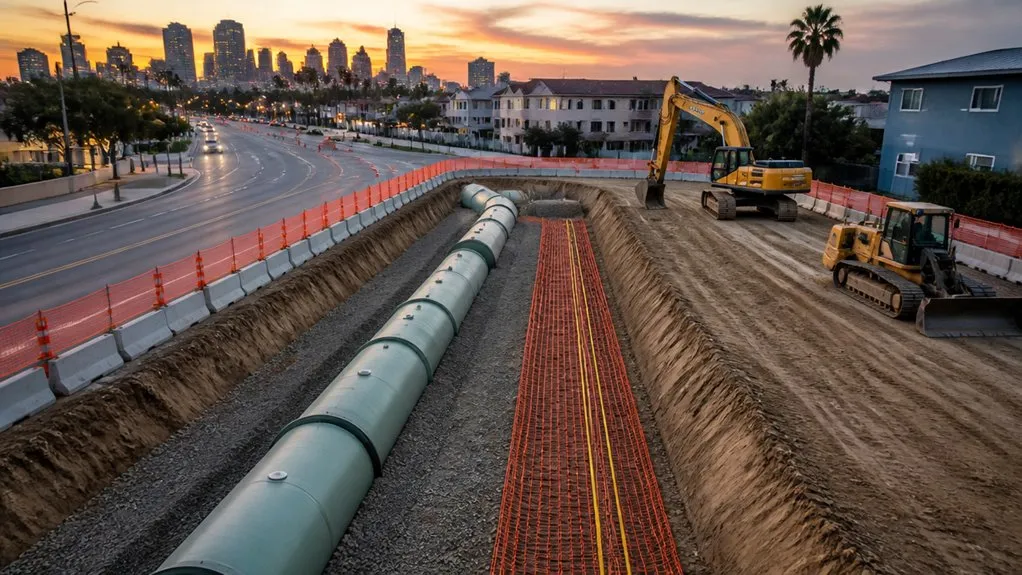
The responsible utility representative or qualified designer must establish cover, separation, crossings and any casing or warning material for the actual installation. Pressure, ownership, location and other services in the corridor can affect the detail. Do not apply a single clearance or warning-mesh depth to every gas line.
SoCalGas’s SoCalGas line-extension process identifies planning coordination such as the meter location, trenching and backfill responsibilities, access, easements and scheduling. Resolve these matters before digging. For a shared trench, have each affected provider and trade approve the arrangement rather than combining separate drawings informally.
Ask who supplies and places the specified bedding, pipe-zone material and remaining backfill. The approved detail must address materials, placement and compaction; there is no general rule that every gas trench receives native fill for the first 12 inches.
Keep the installation visible for required utility and permit inspections and tests. Obtain the responsible inspector’s or utility representative’s release before concealment. Assign protection of exposed pipe and connections to the responsible qualified party; do not move, repair or load an existing line to make excavation easier.
Confirm permits, access and any public-area work requirements before mobilization. A trench affecting a sidewalk or street can require a different permit and restoration process from work confined to a backyard. Ask the relevant authority which permit applies to the described scope.
Book excavation around confirmed installation and inspection availability. Agree on barriers, safe access, spoil storage, hauling and final paving or landscape restoration. The utility and qualified installer control their testing, connection and activation work; an excavation contractor’s completion does not itself authorize gas service.
Describe narrow access and equipment needs using our Bobcat and site-preparation overview.
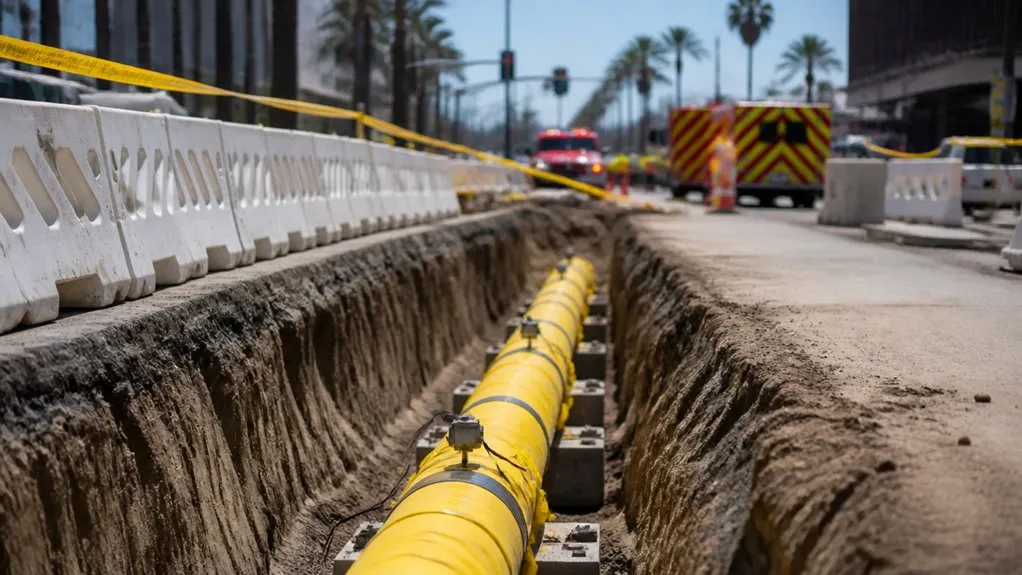
The contractor must evaluate the soil, water, nearby foundations, traffic and equipment loads before choosing the excavation method. Under Cal/OSHA protective-system requirements, Section 1541.1, employees need adequate cave-in protection unless the excavation is entirely in stable rock, or is less than 5 feet deep and a competent person finds no indication of a potential cave-in. Protection may therefore be needed below 5 feet.
Cal/OSHA excavation requirements, Section 1541 requires safe egress for trenches 4 feet or deeper, with no more than 25 feet of lateral travel for employees. Atmospheric testing applies before entry into excavations deeper than 4 feet where an oxygen deficiency or hazardous atmosphere exists or can reasonably be expected. A competent person must inspect excavations before work, as needed during the shift and after rain or other events that increase hazards when employee exposure can reasonably be anticipated. Homeowners should stay outside the excavation.
Report any damage immediately to the facility operator, including coating nicks, dents and other damage without an obvious leak. Follow the emergency directions above for escaping gas and the statutory reporting requirements. Do not backfill over unassessed damage or attempt a temporary gas repair.
What should be available on site? Keep the approved route and applicable details, permit conditions, current ticket and responses, utility contact information, inspection plan and the named responsible parties accessible to the team.
Which qualifications are needed? Verify qualifications for the actual excavation, utility and gas installation tasks. Specialized utility work may have additional operator requirements. A general earthwork scope does not demonstrate approval to install, test or activate a gas system.
What if the route changes? Resolve the changed design and locating limits with the utility, designer and excavator before digging the revised corridor. Keep the ticket current and preserve legible marks throughout the work.
For planned gas-line excavation and site preparation, call 323-403-0924 or request an estimate from BSLA. Provide the ZIP code, project type, approximate route length, access width, surface materials, permit status and intended schedule. Ask the team how to share plans and site photos after contact.
Request a written scope identifying excavation, hauling, backfill and surface restoration separately from design, utility work and licensed trade installation or testing. Our excavation service overview explains the site-work services to discuss with the team.
For related planning information, read our 811 preparation checklist and trenching safety overview alongside the utility provider’s instructions and the requirements for your project.
Browse more articles in Trenching & Utilities.
Accuracy review completed October 21, 2026. Confirm current project requirements with the responsible authority, utility and qualified trade before work.
Skip to content