
When you’re trenching, ensuring safety is vital. Always inspect the trench daily and design protective systems tailored to soil type. Use weather forecasts to guide operations since rain weakens trench walls. Mark utilities before digging and test for hazardous gases in trenches over four feet deep. Place equipment strategically to avoid soil destabilization and maintain distant machinery from trench edges. Follow these protocols diligently, and you’ll be safeguarding yourself and your coworkers, with more insights just ahead.
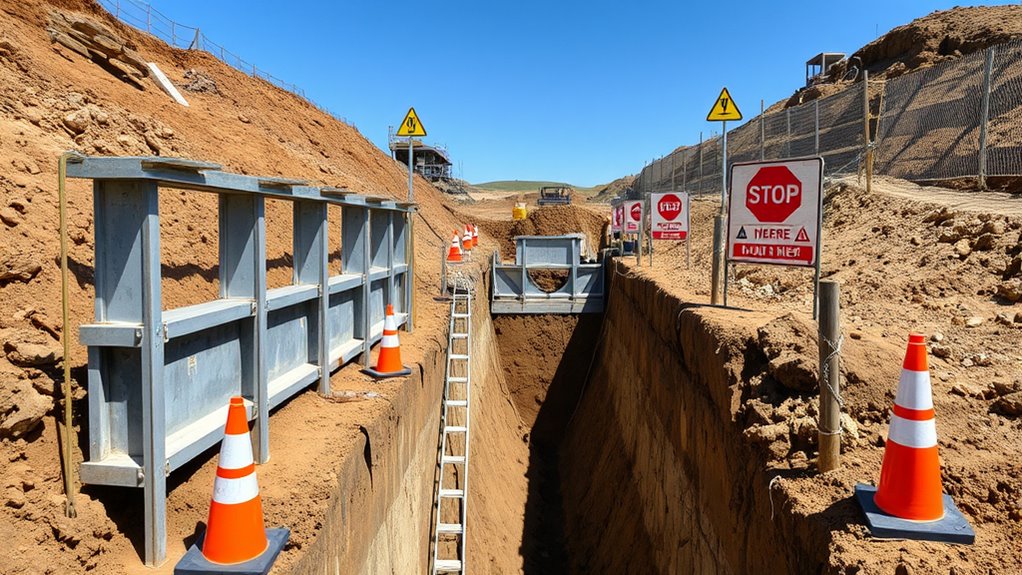
When managing trenching operations, understanding protective systems and engineering requirements is essential for guaranteeing worker safety.
Leveraging trenching technology and adhering to engineering standards are key for effective soil stabilization.
Sloping systems require careful attention to soil-specific angles: 53° for Type A, 45° for Type B, and 34° for Type C.
Remember, OSHA prohibits slopes steeper than 1.5:1 in Type C soil without added support.
Professional engineer approval is a must for designs beyond standard slopes.
Benching systems, with their horizontal steps, demand compliance with OSHA guidelines and aren’t suitable for Type C soil due to instability.
Shoring systems, especially hydraulic, are preferred for distributing loads safely.
Always guarantee daily inspections by competent persons to verify stability and compliance.
As you commence trenching operations, it’s essential to integrate thorough hazard assessments and monitoring into your daily routine.
Begin with daily inspection protocols conducted by a “competent person,” ensuring that any weather impacts on soil conditions are promptly addressed.
You’ll also need to map out and review utility locations before starting excavation, preventing any dangerous strikes that could compromise safety. Additionally, ensure compliance with local construction codes to enhance project safety and avoid costly corrections.
Before any trenching work begins, it’s crucial to conduct daily mandatory checks to guarantee the safety of all personnel involved.
Start with inspection checklists to examine for signs of cave-ins or system malfunctions. Document your findings daily, confirming entry is prohibited until conditions are verified safe.
Verify protective systems like sloping, shoring, and shielding adhere to OSHA standards. Watch for hazard indicators such as soil movement or water intrusion that could compromise safety.
As a competent person, classify the soil to determine necessary protective measures and halt work if unsafe conditions are detected.
Use your authority to ascertain the trench environment is stable, and collaborate with employers to implement required safety protocols, securing compliance through thorough documentation.
Understanding the impact of weather on trenching operations is essential for maintaining safety and efficiency. You should use weather forecasting to anticipate changes, as real-time environmental monitoring systems track precipitation, temperature, and frost cycles. By correlating site data with historical precipitation trends, you can adjust protective measures before issues arise.
| Monitoring Systems | Mitigation Measures |
|---|---|
| Track precipitation | Prohibit trench entry during rainfall |
| Use sensors for soil behavior | Deploy diversion ditches/dikes |
| Correlate with weather patterns | Maintain active water management |
| Monitor groundwater levels | Conduct runoff inspections |
React promptly to automated alerts for threshold exceedance, like accumulated rainfall or soil moisture. Always inspect trenches post-storm, checking for weakened walls and voids. By preparing for extreme weather, you’ll guarantee trench stability and worker safety.
Identifying and marking utilities accurately is essential for safe trenching operations, and it all starts with a mandatory utility location request, famously known as calling “811” before you dig.
When you initiate this request, you’re ensuring that utility marking is done accurately. Use advanced excavation technology, like line locators and inductive sweeps, to detect underground utilities without causing damage.
Hydro-excavators offer a non-destructive way to verify utility locations. It’s vital to mark utilities 50 feet upstream and downstream, and within 25 feet of the mechanically dug edge.
Employ multi-verification techniques, such as combining potholing with machine-based methods, to confirm locations. By following these procedures, you’re not just complying with regulations; you’re safeguarding your team and the community from potential hazards.
When working on trenching operations, soil and weather considerations play an essential role in guaranteeing safety and efficiency.
Understanding different soil types is vital. For instance, Type A soils, like clay, are more stable and less prone to collapse, even with higher moisture levels. However, Type C soils, which are less stable, demand deeper digs or sloping strategies to prevent collapses.
Weather conditions also greatly affect soil stability. After heavy rain, moisture levels can increase, making even Type A soils less stable. You should always assess the soil’s condition before starting any trenching activity.
Stable rock, such as granite, supports vertical trenches due to its non-collapsible nature, regardless of weather.
Always stay vigilant with soil and weather assessments to guarantee safe trenching operations.

Before you break ground on any trenching project, it’s vital to prioritize utility location and damage prevention. Start by calling 811 at least three days before digging to arrange utility marking. This step is significant for your excavation planning.
After receiving One Call responses, confirm that marked utilities align with your plans. If necessary, independently locate private utilities not covered by these services. Always verify utility owner responses, and if marks are missing or unclear, halt operations immediately.
Use visual clues or EM/GPR tools to identify unmarked utilities. White line the proposed trench area to guarantee accurate marking. Respect tolerance zones and use potholing at crossings to safely expose utilities, preventing damage and guaranteeing a smooth excavation process.
Atmospheric testing is essential in trenching operations to guarantee worker safety.
You’ll need to be vigilant about atmospheric hazards, especially in trenches deeper than 4 feet, where OSHA requires testing for low oxygen, toxic gases, or hazardous fumes. Pre-entry gas detection is imperative. Use calibrated equipment to assess air quality before anyone enters the trench.
Ensure vigilant atmospheric testing in trenches over 4 feet deep for low oxygen, toxic gases, or hazardous fumes.
If your operations, like welding or cutting, introduce new risks, conduct post-hazard testing. A competent person must oversee this process, interpreting results and making safety decisions.
Continuous monitoring is essential. If gas levels remain high, adjust ventilation or controls accordingly. Document all test results and actions taken to comply with safety standards.
Proper atmospheric testing protects everyone on site.
To guarantee safety in trenching operations, you must prioritize access and egress planning. Start by designing access points that are easily reachable and compliant with regulations.
Trenches deeper than 4 feet require safe access and egress procedures, like using ladders or ramps that extend at least 3 feet above the trench’s edge. For trenches over 5 feet, document rescue plans and ascertain additional protections like shoring.
In wider trenches, consider stair systems and ascertain clear visibility with markers to prevent accidents.
Proper planning keeps everyone safe and operations efficient.
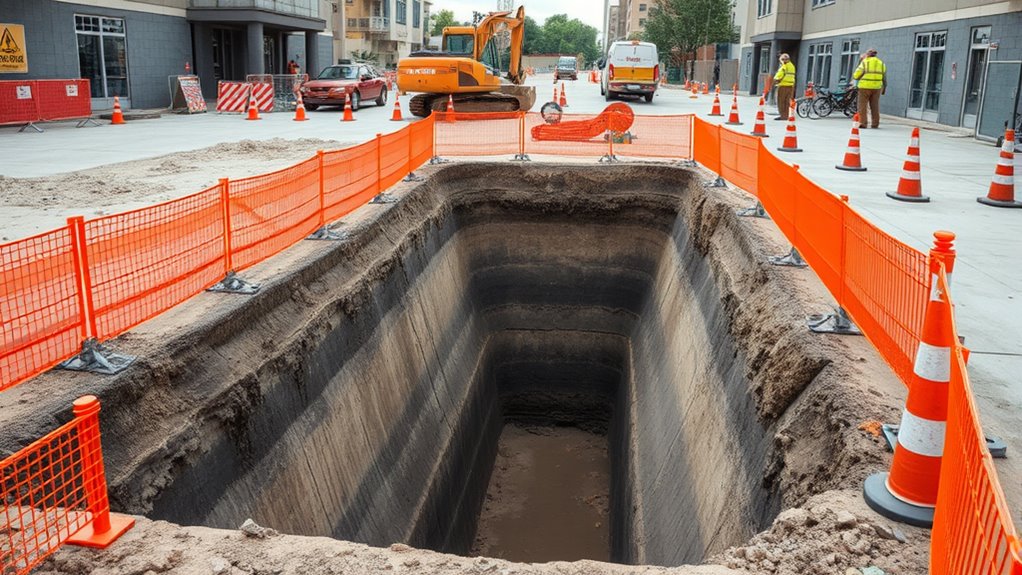
When managing proximity and equipment safety in trenching operations, understanding the potential risks and implementing preventive measures is vital. Proper equipment placement is important. Keep heavy machinery like excavators and backhoes away from trench edges to avoid vibrations that could destabilize the soil. Install protective equipment barriers to enhance machinery safety. Avoid working under suspended loads and guarantee tag lines or remote controls are used. This practice maintains a safe distance between operators and the machinery. Use the following table to guide safe practices:
| Safety Measure | Action Required |
|---|---|
| Equipment Placement | Keep machinery away from trench edges |
| Machinery Safety | Use tag lines or remote controls |
| Protective Barriers | Install cribbing systems near trenches |
| Suspended Loads | Prohibit work beneath raised materials |
As you stand on the edge of a trench, imagine the layers of earth beneath you, each one a potential hazard if not properly managed. Embrace the protocols: from protective systems to soil assessments, every step guarantees safety. Picture the dance of machinery, carefully orchestrated to avoid utility lines. Feel confident knowing atmospheric tests are safeguarding your breath. With well-planned access, egress, and proximity precautions, you’re not just digging; you’re mastering a world of safety and precision.
Skip to content