
Guarantee zero accidents when operating a Bobcat by conducting pre-operational inspections for system checks, fluid levels, and electrical systems. Prioritize thorough operator training and certification aligned with OSHA standards. Adhere to safety protocols like fire prevention, keeping communication clear, and maintaining machinery to pinpoint potential issues early. Be ready with emergency protocols, and utilize real-time monitoring to track performance. Stay focused on safety to optimize operations, and there’s more to discover about achieving accident-free usage.
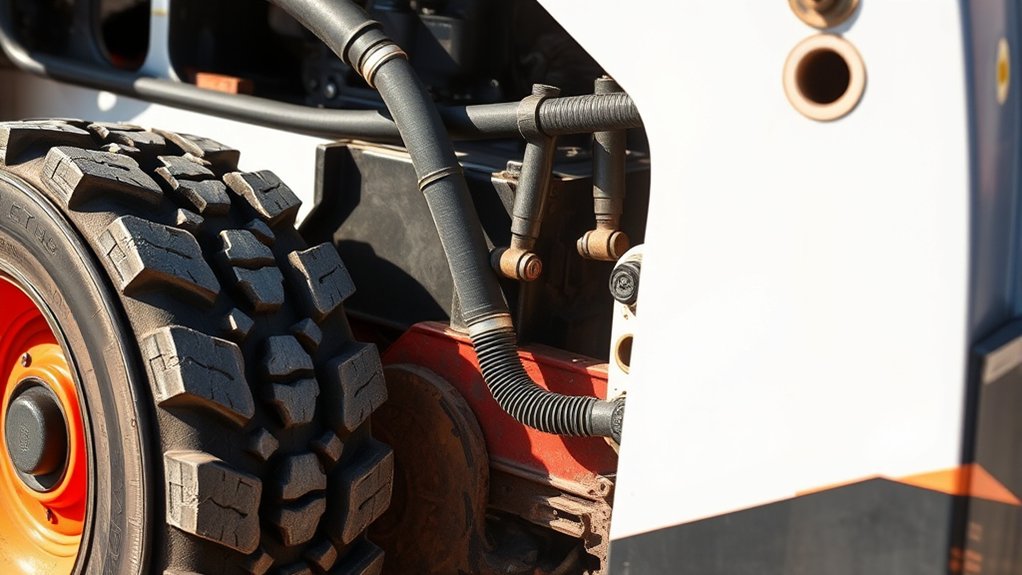
Before you start up your bobcat, it’s essential to conduct an extensive pre-operational inspection to guarantee safety and efficiency. A pre-operational checklist is a must-have tool, highlighting the inspection’s importance.
Begin by examining the engine bay for leaks, debris, and loose belts. Check electrical systems, making sure wiring and battery terminals are secure. Test the reverse alarm and warning lights for functionality.
Start by inspecting the engine bay for leaks and ensuring electrical systems are secure.
Driveline components should be inspected for any signs of wear or damage. Assess safety equipment like handrails and guards to confirm they’re intact. Monitor fluid levels, including engine oil, coolant, and hydraulic fluids.
Inspect for leaks in hydraulic cylinders or lines. Verify attachments and structural integrity by checking the bucket, loader arms, and chassis for any damage. Implementing these practices underscores the importance of commitment to safety and environmental stewardship, which is paramount in excavation operations.
To guarantee you’re operating bobcats safely and effectively, thorough training that aligns with OSHA regulations is essential.
You’ll engage in hands-on skill development through practical training sessions designed to enhance your operational proficiency.
Completing the certification and recertification process not only validates your skills but also keeps you up-to-date with the latest safety standards, securing long-term compliance and safety on the job.
Successful operation of Bobcat and skid-steer equipment hinges on thorough training and certification that aligns with OSHA’s stringent standards. Your journey begins with extensive training documentation detailing the topics and dates covered, guaranteeing full compliance.
Operator evaluations, including written tests and practical assessments, confirm your understanding of safe equipment operation. Initial training must include OSHA-mandated topics, such as operator controls, load limits, and hazard recognition, tailored to your worksite’s specific challenges.
Employers are responsible for providing this OSHA-compliant training, with qualified trainers leading both classroom instruction and practical training. Retraining becomes necessary if unsafe practices are observed or incidents occur.
Maintaining detailed records of evaluations and retraining guarantees preparedness for any OSHA audits, solidifying a zero-accident workplace.
Understanding how to operate Bobcat and skid-steer equipment safely requires more than just classroom theory; hands-on skill development is where knowledge truly transforms into expertise. Through hands-on simulations, you can bridge the gap between theoretical concepts and practical applications.
Blended learning models offer a combination of self-paced online modules and classroom instruction, guaranteeing you gain a thorough understanding before stepping into real-world scenarios.
Skill enhancement progresses systematically from basic controls to advanced maneuvers, all under the guidance of experienced instructors. Customized training schedules allow you to learn at your own pace, while mobile compatibility guarantees access anywhere.
Immediate feedback during simulations helps refine techniques, addressing errors and guiding corrective actions. Such immersive training primes you for competent, confident equipment handling.
Although operating Bobcat and skid-steer equipment can seem intimidating, the certification and recertification process guarantees you’re well-prepared and compliant with safety standards.
Certification pathways involve accredited programs that align with OSHA 1926.20(b)(4) and 1926.21(b)(2) requirements, assuring you’ve mastered hazard recognition and safe operation. Training providers like Bobcat offer formal instruction and hands-on assessments to validate your skills. After passing written exams and competency evaluations, you receive wallet cards or certificates as proof of completion.
The recertification timeline requires refresher training every three years, addressing new equipment and updated safety standards. Practical reevaluations ensure your skills remain sharp.
Employers must fund or arrange accredited training, keeping you qualified and ready to safely operate machinery. This structured approach supports zero-accident safety practices.
To enhance fire prevention and hazard mitigation, start by performing daily checks for fluid leaks and examining hydraulic lines for potential damage, as these can be significant fire risks.
Don’t overlook your electrical systems; inspect them regularly for faults like frayed wires or loose connections, which could ignite flammable materials.
Finally, make it a routine to clear foliage and debris from your engine, radiator, and exhaust systems to prevent overheating and fire hazards.
When addressing fluid leaks in bobcats, it’s crucial to prioritize fire prevention and hazard mitigation strategies to guarantee safety and operational efficiency.
Start by focusing on fluid leakage prevention through hydraulic system maintenance. Use SAE/ISO-compliant couplers and hoses, ensuring they’re high-quality to minimize risks. Replace worn seals with durable materials like synthetic or polyurethane. Avoid low-cost parts that compromise seal integrity.
During installation, apply hydraulic oil to O-rings and threads, following manufacturer torque specifications. Use a crisscross pattern for even gasket compression. Maintain hydraulic fluid temperatures within limits to prevent seal expansion.
Anti-vibration mounts protect couplers from movement, while accumulators absorb shock spikes. Regularly inspect for wear, conduct pressure tests, and document maintenance to catch leaks early.
Inspecting the electrical systems of your bobcat is essential for fire prevention and maintaining safe operations.
Regular electrical audits and wiring inspections help identify potential hazards before they become serious issues. Conduct daily checks using the BobCHECK multi-point guidelines to guarantee all components are functioning properly.
After guaranteeing the electrical systems in your bobcat are operating safely, it’s important to tackle engine debris management to ward off potential hazards and fires.
Engine cleanliness is essential, so regularly remove debris from belly pans, engine areas, and fuel or hydraulic systems. Use compressed air or water, adjusting your methods based on the material type.
Remove belly pans and cab bolts, securing the cab with safety pins, to access and clean critical zones. This helps prevent combustible buildup, especially near fuel lines and exhaust components.
Check air filters daily in dusty environments to avoid overheating. Educate operators on visual inspections for debris buildup.

To guarantee safety while operating a bobcat, it’s vital to adhere to established protocols that not only comply with OSHA standards but also promote practical safety measures.
Addressing operator fatigue and ensuring clear site communication are important for maintaining a safe working environment. Always conduct pre-operational inspections to verify system functionality and follow these guidelines:
Keeping your bobcat in top condition requires regular equipment maintenance and effective debris management. Equipment upkeep starts with daily greasing of bearings, gears, and joints, guaranteeing longevity and reducing wear. Check hydraulic oil levels before each use, and don’t forget to inspect tires for any cracks or signs of damage. Routine oil changes, based on service schedules, are essential.
Debris removal is equally important. Clean dirt and grease from machine surfaces daily to prevent rust. Wipe hydraulic components to avoid foreign particle accumulation. Regularly clean debris from the undercarriage, focusing on rock guards and idlers. These practices not only protect your equipment but also enhance its performance.
| Maintenance Task | Frequency | Importance |
|---|---|---|
| Grease bearings | Daily | Reduces wear |
| Check hydraulic oil | Before each use | Guarantees system function |
| Inspect tires | Pre-operation | Prevents damage |
| Clean debris | Daily | Prevents rust |
Effective emergency protocols and incident response are just as important as regular maintenance in guaranteeing the safety and efficiency of your bobcat operations.
Preparing for unexpected events involves conducting emergency drills and incident simulations to keep your team ready. Equip your machines with HAM radios for reliable communication, and make sure everyone knows the locations of fire extinguishers. Rapid deployment of Volunteer Points of Distribution (VPODs) provides critical supplies during emergencies.
These steps guarantee a swift, effective response to any crisis.

A robust system for continuous monitoring and improvement is essential to maintaining safety in bobcat operations. By utilizing real-time monitoring and predictive analytics, you can track and analyze equipment performance, ensuring machinery operates smoothly. Real-time monitoring allows you to identify trends and receive alerts for potential issues, enhancing safety and efficiency. Predictive analytics help schedule proactive maintenance, reducing unplanned downtime and lowering repair costs. Customizable dashboards provide a thorough overview, enabling informed decision-making.
| Feature | Benefit | Outcome |
|---|---|---|
| Machine IQ Diagnostics | Real-time equipment tracking | Minimized downtime |
| Geofencing | Restricted equipment movement | Enhanced security |
| Predictive Maintenance | Scheduled proactive maintenance | Reduced repair costs |
| Operator Access Controls | Authorized personnel operation only | Increased safety |
| Remote Engine Control | Theft and unauthorized use prevention | Improved equipment security |
By following these safety practices, you’re safeguarding not only yourself but also your team. Imagine a scenario where a trained operator, like Alex, diligently conducts pre-operational inspections, preventing a potential fire by spotting a leaking fuel line. This proactive approach guarantees everyone goes home safely. Remember, regular maintenance, thorough training, and effective emergency protocols are your best allies. Keep monitoring and improving your practices, because a commitment to safety today secures a safer tomorrow.
Skip to content