
A Los Angeles project needs engineered grading when cut and fill exceed 5,000 cubic yards, when excavation is large, or when site hazards raise stability concerns. Hillside properties, Chapter 70 areas, and lots in mapped hillside zones often require it too. A licensed civil engineer must prepare approved plans, along with geotechnical and geology reports, before permits are issued. Inspections, contractor licensing, and haul route review may also apply, and more details help explain why.
Engineered grading in Los Angeles is required whenever a project crosses certain volume, safety, or site-condition thresholds. Under local grading definitions, any cut and fill combined reaching 5,000 cubic yards, or any excavation exceeding that amount, meets the engineered requirements.
Even smaller projects may be classified this way if the permittee chooses, or if a building official identifies special hazards, structural support needs, geologic concerns, or erosion issues. In these cases, a licensed civil engineer must prepare approved plans, supported by geotechnical and geology reports.
The work also needs separate permits, licensed contractors, and department inspection. This framework helps guarantee that grading is reviewed carefully, documented fully, and carried out safely before construction moves forward.
When compliance with local construction codes is required, having an engineer-driven grading plan helps ensure the work matches Los Angeles standards from the start.
Hillside areas in Los Angeles change the grading rules by activating Chapter 70 compliance and other hillside ordinance requirements, which apply beyond standard grading regulations.
Once a property is mapped as hillside, engineered grading becomes mandatory, and permit approval must follow the required review sequence before work can begin.
These rules also limit grading quantities and can affect whether a permit is issued at all.
When a project site falls within a mapped hillside area, the grading rules change in important ways, because building permit approval under the Baseline Hillside Ordinance must come first and can control whether grading permits are issued at all. Under hillside regulations, import or export of earth may be limited, and Maximum Grading Quantities set the ceiling for a property.
| Trigger | Effect | Note |
|---|---|---|
| Mapped hillside area | Ordinance applies | Verify official maps |
| Building approval | Required first | Controls grading permits |
| MGQ exceeded | Extra review | Quantities are capped |
| Remedial grading | May be exempt | Does not count toward MGQ |
Single-family residential lots in R1, RS, RE, and RA zones often face stricter review. Accurate site location, plus clear grading descriptions, helps keep the permit process orderly and predictable.
In Chapter 70, hillside areas change the grading process in a significant way because projects in these locations are treated as engineered grading regardless of how much earth is moved. This rule means a civil engineer must prepare and approve the plans, and the permittee cannot choose a simpler path.
The Department of Building may also require engineered grading when special conditions or unusual hazards appear. Under hillside regulations, professional inspection is required from a civil engineer, soils engineer, and engineering geologist. They observe compaction, perform exploratory work, and submit reports during active grading.
These reports address soil strength, geology, slope stability, and site safety. In practice, the chapter adds careful oversight, which helps protect hillside projects and supports safer construction decisions.
What, then, triggers the 5,000-cubic-yard threshold in Los Angeles grading projects? Any cut or fill operation that reaches 5,000 cubic yards, or a combined total that hits that amount, activates engineered grading. The rule applies in both hillside and non-hillside areas, so the volume itself is the key factor. These threshold implications matter because projects near the limit need civil engineer-prepared grading plans before work proceeds. Even smaller projects may shift into engineered status when special site conditions, unusual hazards, or adverse geology are present. In hillside designations, the exemption disappears entirely. That means grading strategies must account for both quantity and site risk, since support for structures also triggers engineered requirements. Excavation contractors must coordinate closely with engineers and site managers to ensure the engineered grading plan matches real-world earthmoving conditions.
Engineered grading in Los Angeles must first be approved through a civil engineer’s signed and stamped grading plan, which establishes the technical basis for the work.
That approval then moves through agency review, where the Department of Building and Safety, and other required city officials, verify compliance before a permit is issued.
Together, these approvals guarantee the plan meets engineering standards, planning conditions, and site safety requirements.
Civil engineer approval is a central requirement for engineered grading in Los Angeles because the engineer is responsible for the design, technical review, and professional oversight of the work.
These civil engineer roles support grading compliance from the first plan submission through completion, especially when cuts or fills exceed 5,000 cubic yards. The engineer prepares the grading plans, reviews revisions when field conditions change, and coordinates with soils engineers and engineering geologists.
Professional inspection includes observing line, grade, and surface drainage, which fits the engineer’s technical specialty. For hillside tract grading, the civil engineer or responsible land surveyor also submits as-graded plans at the end.
This approval process helps confirm that the work matches the permit, code requirements, and approved design.
Before grading can move forward in Los Angeles, several agencies may need to review and approve the project, because engineered grading affects zoning, drainage, geologic safety, and site-specific development conditions.
The Department of Regional Planning verifies that land use, plots, and permits match Title 21 and Title 22 before grading plans are issued.
The Geology and Soils Section reviews current soils and geologic reports, while the Land Development Division checks hydrology and Low Impact Development requirements.
In hazard areas, geotechnical review may also address faults, liquefaction, and slope instability.
Fire, coastal, or regional agencies can be added through referral sheets.
This agency coordination shapes approval timelines, since revised plans, stamped sheets, and jurisdictional letters may all be required before final clearance.
Haul route approval is required in Los Angeles when a project imports or exports 1,000 cubic yards or more of earth material, and that total is measured across the full duration of the job.
At this point, the haul route and approval process move from a minor review to a formal routing requirement. The same threshold applies to both import and export operations, so either direction can trigger review.
In Hillside Construction Regulation districts, this level also requires Board of Building and Safety Commissioners approval.
The rule separates small grading work from larger projects that need coordinated truck routes, posted conditions, and official oversight.
When volumes rise further, especially in engineered grading projects, additional scrutiny may follow under city grading rules.
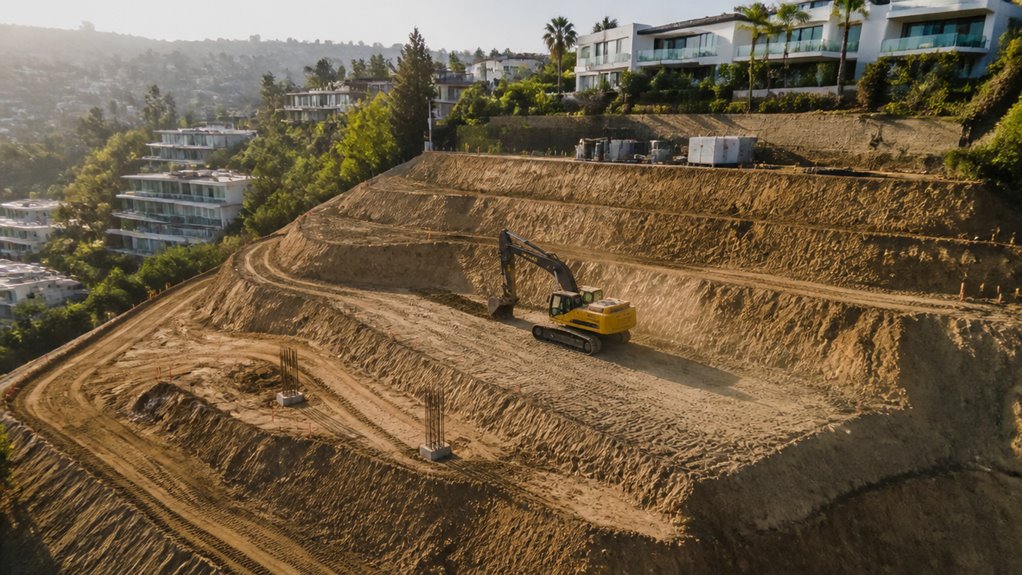
Grading inspections bring several specialists together to verify that earthwork is being completed exactly as approved. Civil engineers coordinate field checks, survey stakes, and plan review, while soils engineers watch ground preparation and fill placement.
Their Inspection Procedures include Compaction Testing, density readings, and notes on equipment, soil sources, and inspection intervals.
Engineering geologists examine bedrock excavation to confirm conditions match approved reports and that adverse geologic issues have been addressed.
Department inspectors compare the permit set with actual site conditions, including legal descriptions and hillside requirements.
Written reports document each visit, and revised recommendations are issued if conditions differ from earlier studies.
Together, these reviews confirm that grading work follows approved plans, supports site safety, and produces a record for final certification.
On hillside projects in Los Angeles, earthwork is not just a construction task; it is one of the earliest forces shaping the entire design. The city’s grading limits often control building size before plans are finished, because grading impacts foundation choices, retaining walls, and site layout.
Spread footings may use more cut and fill than caissons, so a different foundation can keep a project within the Baseline Hillside Ordinance. If the limit is exceeded, review becomes slower and more expensive, with haul routes, export, and bonding adding cost implications.
Early grading decisions also affect geology, shoring, and slope stability work. For this reason, architects and engineers must coordinate from the start, since later changes are usually difficult and costly to recover.
Yes. A project may choose engineered grading before reaching the threshold, and the choice often starts with project specifications and grading regulations.
For example, 1 in 10 smaller sites can adopt this route to gain stronger oversight. By electing it early, the permittee accepts the full engineered grading requirements, including professional plans, inspections, and certifications.
This voluntary option can improve safety, document site conditions, and help prevent surprises during construction.
The Building Official determines whether unusual hazards require engineered grading, and the Superintendent of Building may also make that decision when hazardous conditions are involved.
Their hazard assessment can rely on inspections, geologic reviews, and soils reports. If the site shows instability, seismic risk, or threats to property, the project must follow engineering standards.
This authority helps guarantee unsafe grading is identified early and corrected with careful oversight.
Yes. In hillside areas, even a small excavation can trigger engineered grading, because the rules act like a locked gate, not a sliding scale.
Hillside stability becomes the priority, and excavation regulations require professional review regardless of volume. A project on a designated hillside lot must follow engineered grading standards, while non-hillside sites usually use the 5,000 cubic yard threshold.
This keeps steep-slope work safe, controlled, and properly documented.
Final grading certification usually needs an engineer-of-work statement of compliance, signed and stamped by a California civil engineer, plus accepted compaction reports from the soils engineer.
As-built grading plans approved by city staff, and a landscaping or erosion-control certification letter are also required.
These documents complete the grading certification process and serve as required documentation showing the work matches approved plans, meets density standards, and supports final site stability with confidence.
Yes—foundation choices can reduce grading quantity and, in some cases, lower permit requirements.
Like a lever on a machine, the right foundation types can improve grading efficiency by limiting excavation, retaining more soil on-site, and reducing haul-off needs.
Caisson foundations, for example, may count differently in grading totals than conventional footings.
This can help a project stay within local limits, avoid extra reviews, and simplify approval while still meeting structural and geotechnical needs.
Engineered grading becomes necessary in Los Angeles when site conditions, project size, or hillside terrain create added risk. A notable statistic is that many grading permits require special review once cuts or fills exceed 5,000 cubic yards, showing how quickly a project can move into a more complex process. Careful planning, approved haul routes, and regular inspections help protect safety, reduce delays, and keep designs aligned with city requirements.
Skip to content