
In Los Angeles, a grading permit covers private cut, fill, and pad work to keep soil stable, usually handled by LADBS or LA County Public Works. An excavation permit is different, it applies to digging in or under the public right-of-way, protecting streets, sidewalks, and utilities, and it is coordinated with the Bureau of Engineering. Basements and pools may be exempt if tied to a building permit, but hillside drainage can trigger grading. Utilities can still require Public Works review, and there are thresholds and timelines to confirm.
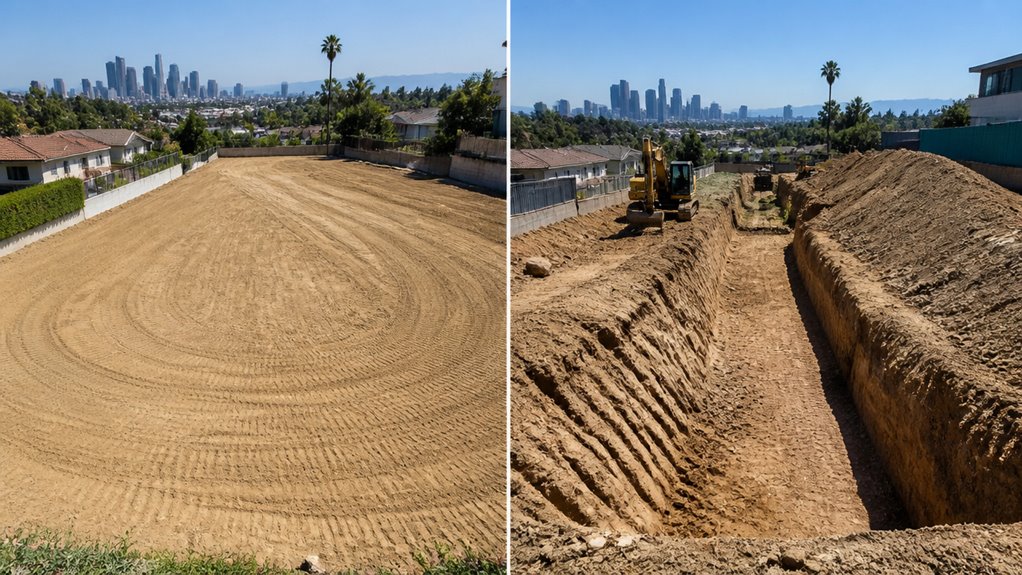
How do grading permits and excavation permits differ in Los Angeles, and when does each one become necessary?
Grading permits authorize earthwork like excavation, fill, and reshaping soil, mainly on private property. Specifically, grading permits help ensure the land remains stable and safe after earthwork is completed.
A grading permit authorizes earthwork—excavation, fill, and soil reshaping—primarily on private property, ensuring the site remains stable.
Excavation permits, by contrast, are commonly tied to work in the public right-of-way, such as trenching streets, sidewalks, or easements. This makes public right-of-way protection a primary focus of excavation permitting.
This creates clear permit differences, because grading focuses on site stability and land condition, while excavation focuses on protecting public infrastructure and access.
In Los Angeles, the approval processes also differ: grading is handled by LADBS or LA County Public Works, depending on jurisdiction, while right-of-way excavation is issued through the Bureau of Engineering district office.
Projects may need both permits when earthwork affects both the lot and the public street.
A grading permit in Los Angeles is typically required for most cut, fill, or pad work once the project exceeds the local exemption thresholds, and the city and county apply these triggers in fairly specific ways.
For cut, excavation criteria often look at cut depth, slope height, and cut volume, with exemption limits common below 2 feet and major triggers when slopes exceed 5 feet or over 1:2.
Drainage considerations can defeat permit exemptions even for shallow work, and hillside grading may require tighter engineering standards.
For fill, permit relevance often begins at fill depth over 1 foot, or when fill volume exceeds 50 cubic yards, especially if it obstructs drainage or supports structures.
Pads are treated as grading work, so pad requirements, slope stability, and nearby impacts commonly drive approval needs.
In Los Angeles County, many grading permit needs can be avoided only when the work fits a specific exemption category, since the County’s rules rely on public safety, drainage protection, and effects on neighboring land, not a general “small job” idea. Exemption criteria in County materials often require the Building Official’s approval and focus on excavation safety, including whether the work creates public danger, harms adjoining property, or changes drainage patterns. Low-risk excavation exemptions can apply to isolated, self-contained areas, wells, utility trenches, permitted structures, cemetery graves, and certain refuse sites controlled by other regulations. bobcat services may be involved in these low-risk tasks, but the exemption still turns on the work’s impacts and compliance requirements. Exploratory excavations directed by a soils engineer or engineering geologist may qualify, but they do not exempt grading of new access roads or pads. Separate site-by-site permits are still usually required.
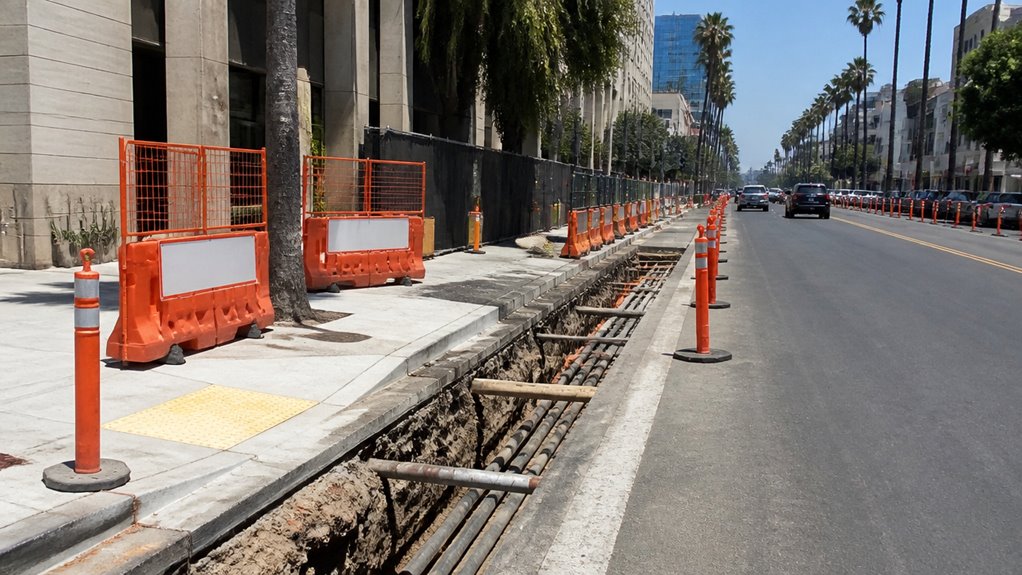
Los Angeles requires an Excavation Permit whenever work involves excavation in or under a public street or public place, including any trenching or digging that threatens lateral support or impacts street improvements.
The trigger depends on factors like where the work occurs within the public right-of-way, the scope and extent of excavation, and whether the project is utility-related. Yet depth or volume thresholds and the need for engineered plans, surveys, and traffic control typically determine what gets submitted and approved.
Before any digging begins, the applicant must coordinate with the Bureau of Engineering and follow the required plan, survey, and traffic-management steps to avoid delaying the project.
When public streets or other public right-of-way areas in Los Angeles are excavated, LAMC requirements generally start with the question of whether the work will disturb the street surface or penetrate the right-of-way beyond the curb, up to the sidewalk line, balancing public safety and community impact.
LAMC Section 62.02 mandates a permit for any work in the public street or right-of-way, while Section 62.05 focuses on excavation permits for public utilities and telecommunication companies.
Underground tanks, pipes, conduits, ducts, tunnels, footings, and even relocating electrolier and pull boxes trigger permit needs. Soil borings, monitoring wells, and pothole drilling also require approval.
The correct permit type depends on authorization, using U-Permits for entities with franchise authority or State PUC certificates, and R-Permits for private parties without that authority.
Depth and trench volume thresholds help determine when Los Angeles projects need an Excavation Permit for work in public right-of-way, especially because the rules can shift depending on the location and the reference grade used.
For a standard Excavation U Permit, trench depth must be at least 16 inches below the surface in a parkway, at least 24 inches below established grade in a local street or alley, and at least 30 inches below established grade on boulevards, avenues, or collector streets.
The City measures street installations against the established grade of the gutter flowline, reflecting excavation standards tied to specific grade references, not one citywide surface.
Separately, County guidance may exempt small work, typically under 50 cubic yards and less than 2 feet deep, showing how shallow work can avoid grading-type triggers even when right-of-way excavation still needs permitting.
Because public right-of-way work can affect streets, drainage, and nearby properties, the permit trigger for an excavation project in Los Angeles usually depends on what must be shown in the submittal package. Grading plan specifications must be signed by a state-licensed preparer, drawn to scale, and detailed enough to prove code compliance, including drainage-area maps, estimated runoff, and drainage device requirements. Plans also identify existing contours, cut-and-fill limits, top and toe of cuts and fills, daylight lines, and structures within 15 feet. Surveys and reports commonly include soils reports, often required over 5,000 cubic yards.
| Trigger item | What reviewers look for | Typical submittal |
|---|---|---|
| Drainage impacts | Hydrology/hydraulic tie-in | Calculations, maps |
| Street connections | Street improvement match | BOE street plan copy |
| Internal streets | Fee proof and coordination | Inspection or deposit proof |
| Adjacent hazards | Nearby structures | 15-foot impact notes |
For Los Angeles County, a grading permit analysis often starts with a practical “50-yard” yardage rule and a simple depth check that together decide whether a proposed excavation or fill can qualify for a limited exemption.
For excavation, the key is excavation depth: if the cut is under 50 cubic yards, it may be exempt only when it is less than 2 feet deep.
For fill, the exemption often hinges on fill volume and depth: less than 50 cubic yards and under 3 feet deep at the deepest point may qualify if slope limits are met. A smaller fill exemption applies at less than 5 feet deep when volume is 20 cubic yards or less.
However, steeper cut slopes, even with low fill volume, can still trigger review.
Timing is the key lens through which a Los Angeles grading permit application should be planned, since the process moves in stages rather than jumping straight from submission to approval.
In the application process, applicants submit online via ePermit or in person, enter the location, add a work description, and upload plans plus required attachments, including a plot plan for the area of work.
After intake, the regional grading engineer performs an initial review and routing, which includes checking geotechnical and soil or geology reports, plus approval letters.
The review timeline is typically 6 to 16+ weeks, with initial geotechnical review at 2 to 4 weeks. If corrections are needed, second review cycles of 2 to 3 weeks repeat, and each correction cycle can add 3 to 5 weeks.
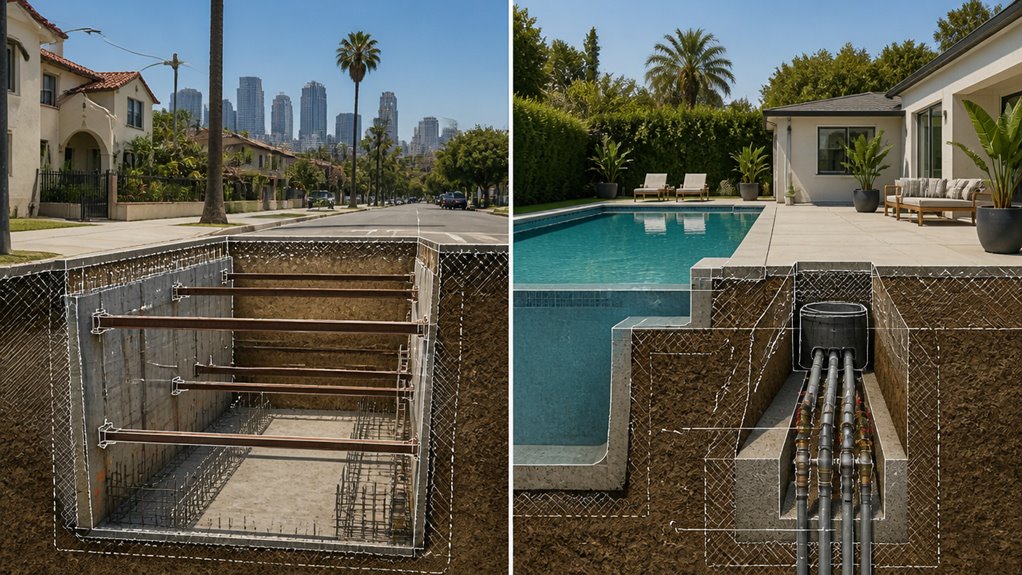
What permit a Los Angeles project needs for basements, pools, and utilities depends less on the label of the job and more on what kind of earthwork is happening, where it happens, and whether the excavation is already covered by a valid building permit.
For basement excavation, LADBS often treats foundation work as an exception to grading requirements when it is authorized by a building permit, especially outside hillside areas.
In hillside considerations, grading permits are more likely, though LADBS may waive them for limited footing or grade-beam excavations up to 5 feet deep.
For pools, pool regulations similarly allow exceptions when the pool dig-out is tied to a building permit and avoids hillside grading.
Utility trenching for wells, tunnels, or utilities may not need a grading permit, but public right-of-way work usually triggers a Public Works excavation permit.
They can determine if their excavation counts as grading work by comparing it to Los Angeles grading definitions.
If the excavation types include shaping slopes, moving earth for fill, changing site contours, or altering drainage or elevations, it is usually grading.
Digging only may be exempt if it stays under about 2 feet deep, avoids steep cut slopes, and doesn’t exceed 50 cubic yards or redirect drainage.
Hillside areas also raise scrutiny. They should confirm exemptions with plan details.
Slope stability and drainage impacts under a grading permit are approved through technical grading plan review.
LADBS requires the Grading Division to approve geotechnical reports first, using slope analysis tied to soil and geology recommendations.
Drainage assessment is reviewed in the grading plan too, including interceptor drain slopes, discharge methods, and how terracing controls runoff.
For hillside work, professionals must verify drainage and containment, and LADBS confirms engineered details before permit issuance.
Yes, utility trench permits in Los Angeles County can require traffic control, like a “traffic light” governing safety.
If the utility trench work affects lanes, parking, or street access, the permit process expects compliance with Greenbook and Graybook provisions, unless a specific traffic plan is approved with the permit.
The County also limits street closures, usually requiring prior approval and a written traffic plan prepared by a civil engineer.
No, in most Los Angeles hillside cases he should not start earthwork before grading permit plan check approval.
LADBS grading plan checks are generally required before the permit is issued for slope, landslide, tract, mass grading, and similar site prep work.
Under earthwork regulations and typical permit timelines, starting early can violate city or county rules, trigger stop-work, and delay inspections.
Exceptions are limited, often only minor exempt excavation or specific counter-issued remedial grading situations.
After rough grading, the next inspections usually follow a sequence: first, backfill is checked in stages to confirm soil compaction requirements, then erosion control measures are verified, and then drainage devices are checked as work progresses.
If the project includes pools, inspectors may perform a bottom or excavation-related check before any fill, followed by a backfill final inspection.
Throughout, inspectors compare field conditions to approved plans, and they look for stable slopes and functioning drainage.
In Los Angeles, the project’s first footprint often decides the paperwork, grading permits look like the “foundation work” paperwork, while excavation permits feel like “digging into the street” paperwork. If soil depth changes, cut-and-fill, or pads drive the plan, grading rules lead the process. If work touches sidewalks, curbs, or other public areas, excavation permits can take over. Getting the right permit early, keeps inspections smooth, schedules stable, and costs from creeping up.
Skip to content