
When it comes to foundation excavation in Los Angeles, navigating the city’s unique geological challenges can feel overwhelming. Did you know that California experiences over 10,000 earthquakes a year? For homeowners and builders, this reality raises critical questions about ensuring structural integrity and safety. This article is designed for anyone involved in construction or renovation, especially those looking to lay a solid foundation in this vibrant city. We’ll explore how partnering with expert excavators can alleviate common concerns regarding soil stability and compliance with local regulations. You’ll learn about the importance of assessing soil types and groundwater to prevent erosion and landslides, as well as the advanced machinery that makes excavation efficient and precise. By the end of this piece, you’ll have a clearer understanding of the essential steps to secure a reliable foundation that stands the test of time in Los Angeles.
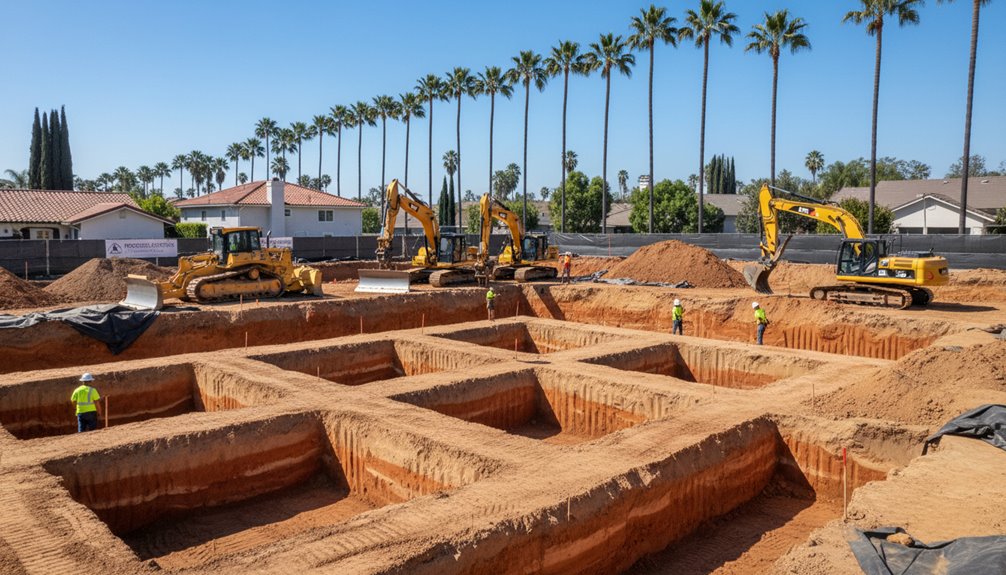
Understanding the importance of professional excavation services is crucial for any construction project in Los Angeles.
Recognizing the value of expert excavation is vital for Los Angeles construction projects.
These specialists provide a solid groundwork necessary to ensure structural integrity, especially in an area prone to seismic activity and varied soil conditions.
For more in-depth guidance, check out our comprehensive guide on site preparation for construction in urban environments.
Navigating the geological challenges in Los Angeles requires careful planning due to its seismic activity and varied terrain.
Construction projects must prioritize foundation stability by employing appropriate excavation techniques that cater to the site’s unique geology, which may include clay, sand, or rocky soil.
Additionally, utilizing advanced machinery can enhance excavation efficiency and safety on challenging terrains.
Understanding these factors is crucial for successful urban development.
For further insights on construction regulations, refer to our comprehensive guide on Los Angeles building codes.
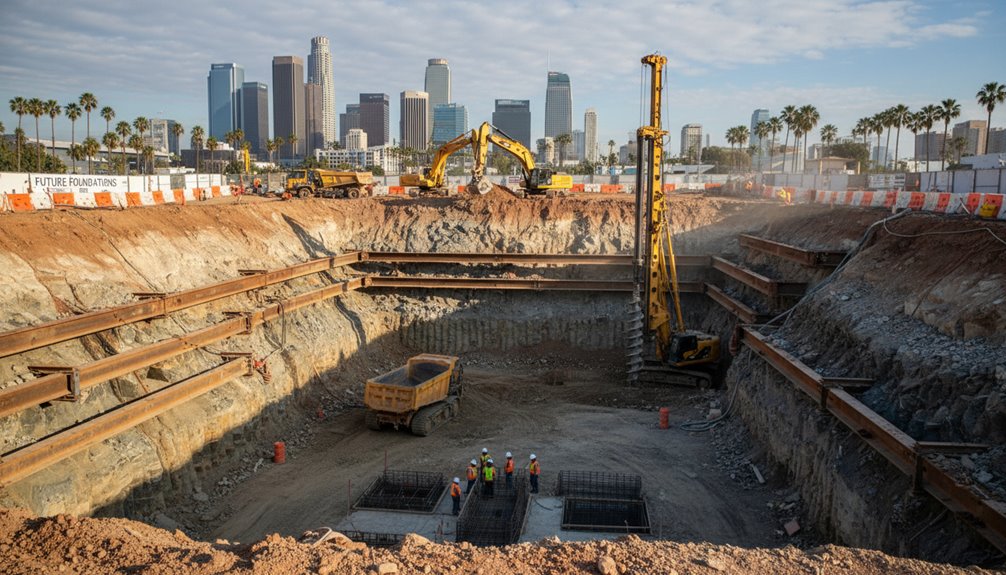
Excavation is crucial for ensuring foundation stability, particularly in areas like Los Angeles with varying ground conditions. By removing debris and loose soil, you prepare the site for a solid foundation while also promoting effective drainage.
Excavation is key for foundation stability, ensuring solid ground and promoting effective drainage.
This process helps in preventing erosion and water damage, which can severely affect structural integrity.
A well-executed excavation not only supports seismic retrofitting efforts but also enhances the overall resilience of the foundation. Additionally, expert grading services are essential for achieving optimal land conditions that bolster foundation strength.
For more insights into foundation preparation, check out our guide on effective site grading techniques.
To achieve optimal outcomes in foundation excavation, incorporating advanced techniques is crucial. Utilizing modern machinery and technologies, such as GPS-guided excavation and 3D modeling, ensures precision and efficiency.
These methods allow for accurate site preparation in line with design specifications, effectively reducing material waste.
By leveraging these innovative approaches, construction projects can navigate complexities with ease.
For further insights, see our guide on modern construction practices.
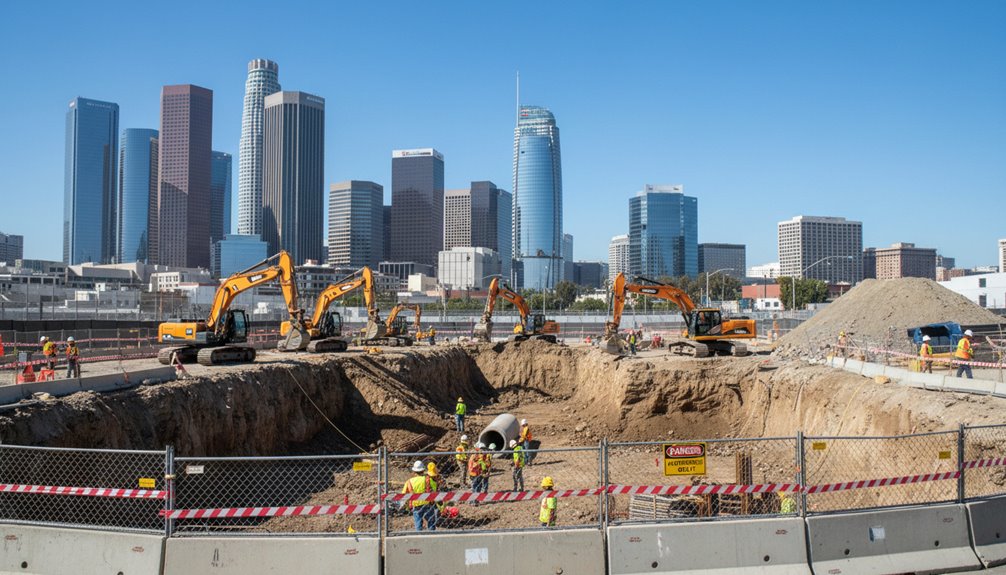
Ensuring safety and compliance in excavation projects is crucial for protecting workers and the public. Adhering to local regulations and codes not only meets legal requirements but also fosters a secure environment.
Adhering to regulations ensures legal compliance and fosters a secure excavation environment.
Key safety measures, such as shoring and sloping, are implemented by professionals to minimize risks.
By focusing on these practices, excavation teams can significantly enhance site safety and compliance.
For further insights, see our guide on effective safety protocols in construction projects.
Custom excavation services in Los Angeles are tailored to accommodate specific project requirements, ensuring tasks like land clearing, grading, and trenching are effectively executed.
By adapting to client specifications and unique site conditions, these solutions enhance structural integrity for both residential and commercial projects.
With their commitment to accuracy and longevity, custom excavation solutions are essential for projects of all sizes.
For more insights on ensuring project success, check out our guide on effective excavation strategies.
Selecting the right excavation partner requires careful consideration of their local expertise and adherence to safety standards.
But how can you ensure they employ the latest techniques to achieve the best results for your project?
Understanding the importance of advanced methods in excavation is crucial for a successful outcome.
Selecting the right excavation team is crucial for the success of your project in Los Angeles, where the terrain presents unique challenges.
Look for a foundation repair company with a wealth of experience, ideally decades, as this ensures they’re well-versed in local conditions and regulations. A solid track record across various project sizes—from small homes to large commercial sites—demonstrates their capability.
By focusing on these factors, you’ll foster a productive partnership that keeps your project on track.
For further guidance, see our guide on selecting contractors for construction projects.
Selecting a safe excavation partner in Los Angeles involves several key considerations. First, prioritize companies with a strong local presence, ensuring they’re familiar with Los Angeles County regulations and urban challenges.
It’s also essential to confirm that the company adheres to industry safety standards and employs advanced technologies and machinery.
By focusing on these factors, you enhance the likelihood of a successful and compliant project.
For further insights on excavation standards, see our guide on best practices for construction safety.
In conclusion, investing in professional foundation excavation services in Los Angeles is essential for ensuring the stability and longevity of your construction projects. By applying the strategies discussed in this article, you can navigate the complex geological landscape, enhance safety, and comply with regulations, ultimately saving time and reducing costs. Understanding the intricacies of excavation not only protects your investment but also contributes to a solid groundwork for your legacy. For more insights and expert tips on laying a strong foundation, consider exploring additional resources to guide your journey in construction excellence.
Start your new project right by prioritizing proper site grading, which guarantees safety and functionality. Begin with evaluating site topography and soil composition to align with zoning codes. Develop effective grading plans to enhance aesthetics and meet approval criteria. Use precision tools and techniques like laser-guided systems for accurate grading. Overcome common challenges by analyzing soil and erosion risks. By focusing on these basics, you’ll assure your project is compliant and visually appealing. Discover further insights to enhance your project.

When planning any construction project, proper site grading is essential for guaranteeing both safety and functionality. You need effective drainage solutions to direct water away from buildings, preventing foundation damage.
By managing stormwater with controlled slopes and channels, you reduce the risk of runoff pooling in problematic areas like basements or backyards. Integrating both natural and artificial drainage systems is key to maintaining foundation stability.
Effectively managing stormwater with strategic slopes and channels prevents runoff pooling and maintains foundation stability.
Proper site grading also creates compact, level surfaces that prevent uneven settling or shifting, vital for the structural stability of your building. Align your grading efforts with building codes to avoid moisture retention that can lead to mold or rot issues. Additionally, incorporating rough grading ensures a stable base for any construction project. By prioritizing these strategies, you’ll provide a stable surface for construction and guarantee a long-lasting, trouble-free foundation.
Evaluating site topography and soil composition is fundamental for any construction project, as it lays the groundwork for successful grading and building.
Through topography analysis, you examine existing elevation changes, natural contours, and drainage patterns. Tools like GIS overlay topographical data with site plans, guaranteeing precise grading needs.
Meanwhile, soil testing identifies soil types like clay or sand, which influence bearing capacity and drainage properties. Geotechnical assessments reveal unstable layers needing stabilization, while compaction tests confirm soil density meets standards.
Preserving natural drainage channels is essential to prevent erosion and secure water flow. Using 3D modeling, you can visualize grading impacts on aesthetics and functionality. Additionally, understanding local soil composition is crucial for effective grading and drainage management.
Crafting a successful grading plan involves several key components that guarantee your project aligns with both aesthetic goals and regulatory requirements.
Start by incorporating grading plan essentials like title blocks, scale bars, and contour lines to clearly convey existing and proposed elevation changes. Don’t forget north arrows and utility assessments, ensuring your project respects property boundaries and existing infrastructures.
Approval criteria involve lot coverage calculations, earthwork estimates, perimeter compliance, and drainage verification, all supporting slope stabilization techniques.
Keep slopes stable using proper pavement, access, and landscape guidelines, while retaining structures address areas exceeding natural stability.
Collaborate with multi-disciplinary teams for insights and peer reviews, ensuring plans meet certification needs and receive stakeholder approval.
Balancing these factors guarantees a thorough and effective grading plan.
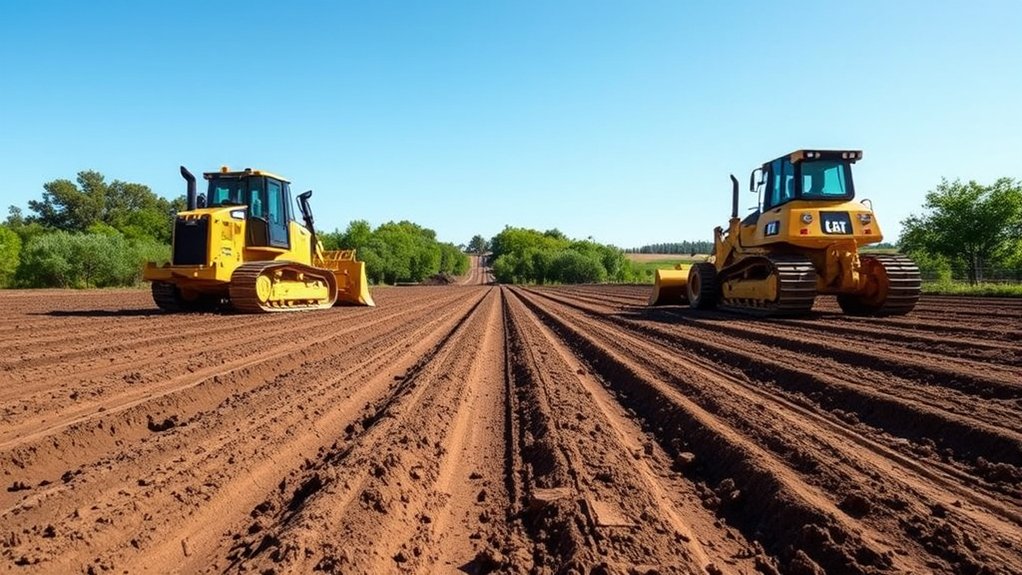
When it comes to site grading, precision leveling equipment like laser-guided systems and GPS-enabled machinery is essential for achieving accurate slopes and elevations.
You’ll also need to focus on erosion control strategies, which include using silt fences, retaining walls, and proper drainage systems to prevent soil displacement and environmental degradation.
Precision leveling equipment is essential for achieving accurate and efficient site grading in construction and landscaping projects. You’ll find tools like motor graders and dozer blade attachments indispensable for precision grading on large-scale tasks such as foundation work and slope construction.
For smaller adjustments, grading rods and carpenter’s levels are perfect, offering simple leveling techniques for shorter spans. Self-leveling lasers automatically adjust, reducing user error and providing consistent alignment.
Advanced leveling instruments, like dual-mast equipment, offer stability for 3D contour grading, while laser-based systems project beams over long distances, ideal for expansive sites.
Implementing precision grading involves contour mapping and cross-referencing with multiple tools to guarantee accuracy. By selecting the right attachments, you can adapt to different terrains and achieve the desired results efficiently.
Effective erosion control strategies are essential for maintaining stability and preventing damage on graded sites. To achieve successful erosion mitigation, implement vegetation-based methods like compost blankets and filter soxx, which promote rapid growth and organic sediment control.
Protect existing vegetation using Low-Impact Development techniques. Structural barriers such as earth walls and riprap offer robust sediment control, especially in high-runoff areas. Efficient drainage systems and surface roughening further direct runoff away from vulnerable sites, minimizing erosion risk.
Temporary stabilization through erosion control blankets and seed blankets accelerates plant establishment, providing crucial cover for exposed soil.

When tackling grading challenges, you must first assess and adapt to the site’s unique terrain and soil conditions.
Conduct thorough surveys to map out elevation changes and test the soil composition to guarantee stability, especially when dealing with expansive clays.
Maneuvering terrain variations in site grading presents a set of challenges that, while common, can be effectively managed with strategic planning. Start with a thorough terrain analysis to understand slope stabilization needs. Implement techniques like creating terraces for steep areas and retaining walls to stabilize slopes. These methods help in reducing erosion risks and improving drainage.
| Strategy | Purpose |
|---|---|
| Terrain analysis | Understand slope and drainage challenges |
| Slope stabilization | Prevent erosion and maintain integrity |
| Retaining walls | Stabilize slopes and manage land use |
| Terraces | Reduce erosion and enhance water flow |
| Erosion control blankets | Prevent soil displacement post-grading |
Incorporate erosion control blankets and bioengineered solutions to reinforce slopes, ensuring long-term stability and sustainability.
Grading a site demands a deep understanding of soil composition, which plays an essential role in overcoming common grading challenges.
First, conduct thorough soil analysis to identify the proportions of sand, clay, or mixed soils. Testing soil density is vital to evaluating its load-bearing capacity, guaranteeing the ground can support structures without issues.
Moisture content tests help determine workability and the need for compaction, especially vital when dealing with high moisture levels that could compromise stability.
For sandy soils, use compaction techniques to enhance stability, while clay soils benefit from drainage solutions to manage water retention.
Implement soil stabilizers like lime or cement for mixed soils.
Maneuvering the landscape of regulatory standards and compliance is essential in site grading projects. You’ll find yourself traversing a maze of regulatory frameworks and compliance audits. Zoning codes and environmental protection mandates form the backbone of your project requirements. You’ll need permits addressing slope stabilization and drainage compliance to prevent water-related issues. Legal restrictions are vital when dealing with protected habitats or historical landmarks.
| Compliance Factor | Description | Example Requirement |
|---|---|---|
| Zoning Codes | Adherence to property setbacks | Coverage ratios |
| Environmental Mandates | Erosion and stormwater control | Habitat preservation |
| Permits | Slope stabilization and drainage compliance | Water-related issue prevention |
| Legal Restrictions | Protected habitats, landmarks | Ecologically sensitive areas |
| Stormwater Management | BMP implementation | Local regulation alignment |
Ensuring compliance helps avoid project delays and legal penalties, keeping everything on track.
When it comes to enhancing both aesthetics and functionality through grading, you’ll find it’s an essential element that shapes not only the visual appeal but also the usability of a site.
Creating a gentle visual flow with contouring enhances natural movement and elevates functional aesthetics. By designing tiered landscapes, you can introduce layered planting zones and gardens that maintain both beauty and accessibility.
Preserving natural elements, like ridges and valleys, guarantees organic appeal, while coordinating water management discreetly with swales or berms prevents erosion.
Grading for subtle elevation contrasts highlights architectural features, creating focal points. Affirming balanced functionality through elevation adjustments allows for safe, accessible pathways, reducing slip hazards and maximizing usability across the site.
In mastering site grading, you’ve navigated the irony of reshaping nature to suit human needs while aiming for harmony with it. You’ve learned to assess topography, develop plans, and tackle challenges, all under the watchful eye of regulations. With the right tools, you create spaces that are both functional and aesthetically pleasing. Remember, grading isn’t just about moving earth; it’s about crafting a foundation for what’s to come, balancing our desires with nature’s unpredictability.
Skip to content