
Commercial Excavation: Laying the Groundwork for Success in Non-Residential Projects
Did you know that effective site preparation can significantly reduce construction delays and costs? In the world of commercial excavation, this knowledge is crucial for project managers, developers, and contractors working on non-residential projects like shopping malls and industrial facilities. One of the core challenges in this field is ensuring a solid foundation while adhering to safety regulations and optimizing efficiency. This article delves into the essential aspects of commercial excavation, including critical techniques such as land clearing and grading, which are vital for creating stable sites. We’ll also explore the importance of complying with OSHA standards to maintain a secure work environment. Additionally, you’ll learn how advanced technology, like GPS and drone surveys, can enhance project precision and efficiency. By understanding soil analysis, you can better address stability concerns and potential contamination issues, setting the stage for successful developments. Join us as we uncover the vital steps in mastering commercial excavation for your next project.
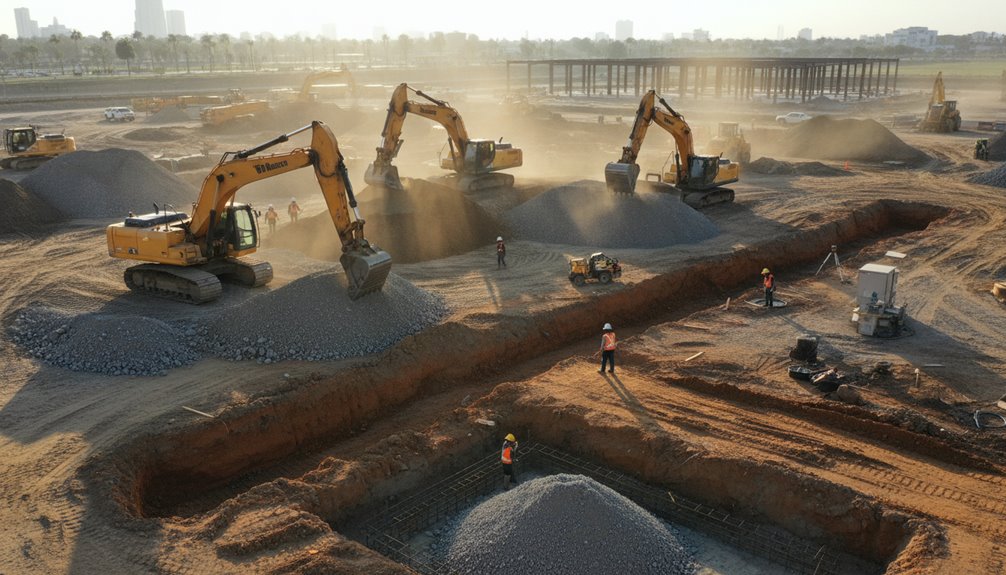
Commercial excavation is vital for preparing sites for non-residential constructions like malls and industrial buildings. This process involves critical tasks such as land clearing, soil removal, and grading to ensure a solid foundation.
Essential for site preparation, commercial excavation ensures a solid foundation for non-residential construction projects.
Utilizing specialized equipment and techniques is necessary due to the scale and complexity of these projects. Understanding soil classification is crucial, as different types—like Type A, B, C, and solid rock—affect excavation methods and structural stability. Additionally, it’s important to consider the removal of contaminated soil and underground utilities while adhering to safety regulations.
To guarantee reliable management of various tasks, professional excavation services are essential for successful project execution.
For more insights on site preparation, check out our guide on land clearing strategies.
When considering the differences in excavation between residential and commercial projects, it’s clear that commercial excavation involves larger scales and more intricate challenges. But what specific factors contribute to these complexities, particularly when it comes to safety regulations and utility management? Understanding these elements can help you navigate the excavation process effectively. Additionally, commercial projects often require site clearing to accommodate larger structures and infrastructure, necessitating a more comprehensive approach to excavation.
Understanding the differences between residential and commercial excavation is crucial due to the distinct challenges each presents.
Commercial excavation involves larger sites and more complicated requirements, which means specialized equipment and techniques are often necessary.
Careful planning and execution of these aspects are key to successful project completion and safety. Additionally, quality excavation services set the standard for project success and impact overall construction outcomes.
For further insights, see our guide on effective excavation techniques.
Navigating safety and regulation standards in commercial excavation is crucial due to the heightened complexities involved. Unlike residential projects, commercial sites must comply with stringent OSHA-approved safety measures, ensuring all personnel are trained and certified in heavy machinery and safety protocols.
Rigorous site assessments and soil stability evaluations are essential for maintaining structural integrity and preventing accidents.
Understanding these differences is vital for successful operations. For more insights on excavation best practices, refer to our guide on effective project management strategies.
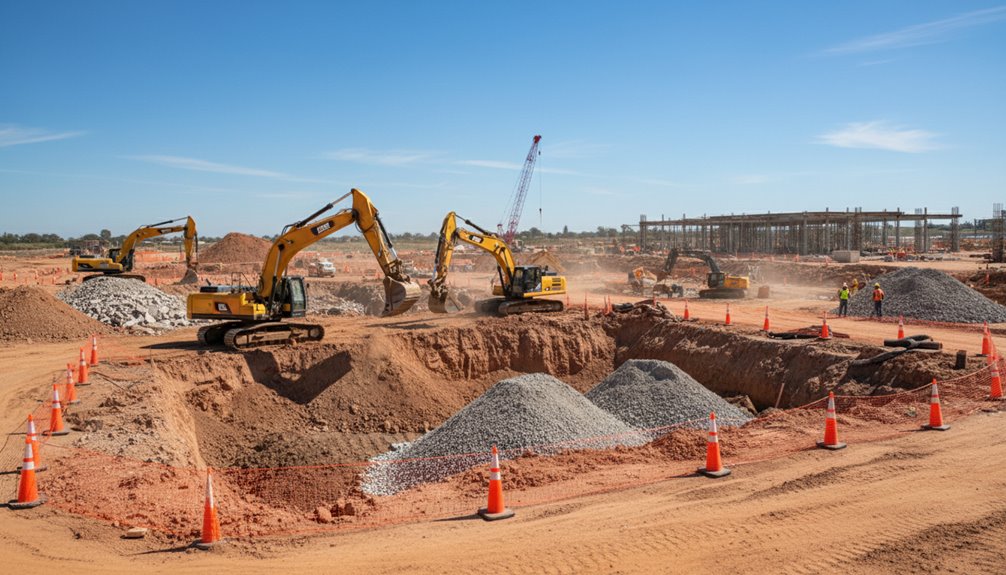
Site preparation is crucial for successful commercial excavation, as it lays the groundwork for subsequent tasks.
But how do soil analysis techniques influence the choice of excavation methods? Understanding this relationship ensures safety and stability while tackling diverse soil types.
Site preparation is crucial for establishing a solid foundation for commercial buildings. It begins with land clearing, where trees, rocks, and debris are removed, providing a clean area for construction.
Following this, the attention shifts to underground utilities, ensuring that water, gas, and electricity services are correctly installed and mapped to prevent future issues.
These steps collectively create a reliable groundwork, paving the way for a successful construction project.
For more insights, see our guide on effective excavation practices.
Understanding soil analysis techniques is crucial for ensuring safe excavation and construction. By evaluating various soil types—such as gravel, clay, sand, and silt—you can predict their behavior during excavation.
The Occupational Safety and Health Administration (OSHA) categorizes soils into classifications like Solid Rock, Type A, Type B, and Type C, with Type C being the most unstable, highlighting the need for thorough assessment.
For further insights on excavation safety protocols, see our guide on construction site safety measures.
To ensure a safe utility installation during excavation, start by meticulously planning and coordinating with industry professionals. This collaboration is crucial for integrating water, electricity, and sewage systems seamlessly while adhering to local regulations regarding the depth and positioning of utility lines.
Next, employ effective trenching techniques. Utilize proper shoring methods to protect against cave-ins, particularly in unstable soil types like Type C, which is vital for both worker safety and the integrity of the utilities.
For further insights on excavation safety protocols, see our guide on best practices in construction.
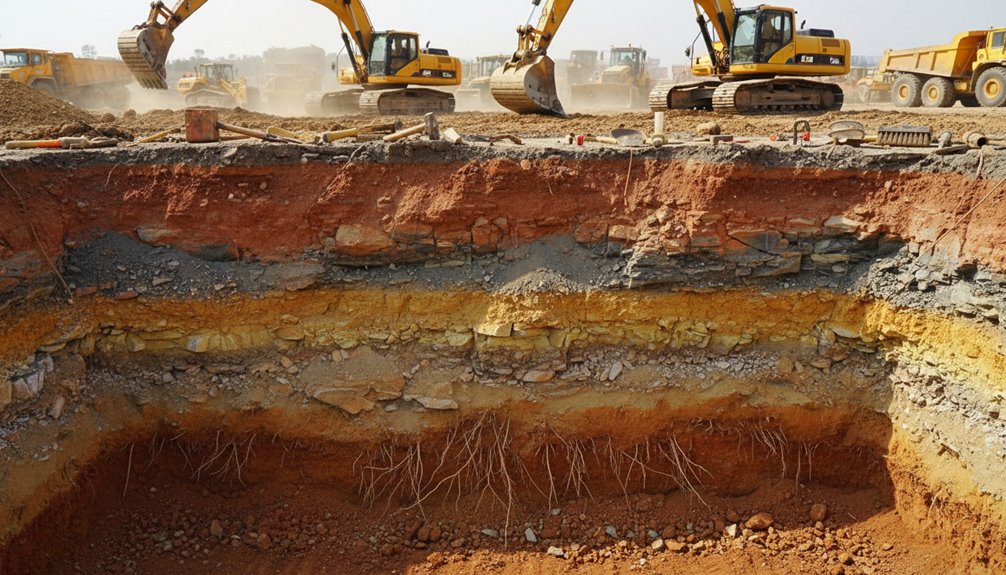
Soil analysis is crucial for commercial excavation projects, as it informs the load-bearing capacity and overall design of structures. Recognizing the specific soil type—whether Type A, B, or C—affects excavation strategies and stability.
By assessing moisture levels and compaction, you can enhance drainage and ensure a robust foundation.
Understanding these factors sets the groundwork for successful project execution.
For more insights on soil testing techniques, see our guide on effective soil management practices.
Ensuring safety in commercial excavation projects involves rigorous adherence to safety measures and regulations. Following OSHA guidelines for trenching and excavation is crucial to prevent collapses and protect worker safety. Regular safety training and certification programs also help mitigate risks associated with heavy machinery and various site hazards.
To enhance site safety, consider these essential steps:
Choosing the right excavation contractor hinges on several key factors. First, prioritize those with substantial experience in commercial excavation, as they’re well-versed in the specific challenges of non-residential construction.
Prioritize contractors with extensive commercial excavation experience for non-residential construction challenges.
Additionally, check their fleet size and the types of heavy machinery they possess to ensure they can efficiently handle large-scale projects.
By following these steps, you can confidently select a contractor equipped to meet your excavation needs.
For further information, see our guide on evaluating construction contractors.
Modern excavation techniques are rapidly evolving to enhance efficiency and precision in commercial construction projects. Innovations like drone technology are transforming site surveys, enabling more accurate planning and reducing the time needed for manual measurements.
Similarly, vacuum excavation safely uncovers underground utilities, minimizing disruption and enhancing safety.
Key trends include:
As these advancements reshape the industry, it’s essential to stay informed on the latest tools and methods. For further insights, refer to our guide on the best excavation practices.
In summary, successful commercial excavation projects resemble intricate jigsaw puzzles, where every element matters. By applying the strategies discussed, such as thorough soil analysis and choosing the right contractor, you can streamline your project and enhance safety measures, ultimately leading to timely and efficient completion. Understanding these excavation techniques not only saves time but also reduces costs, making your project more sustainable. If you’re interested in optimizing your excavation endeavors, consider exploring additional tips and guides to help you take the first step toward success.
Skip to content